What are the limitations of laser cleaning?
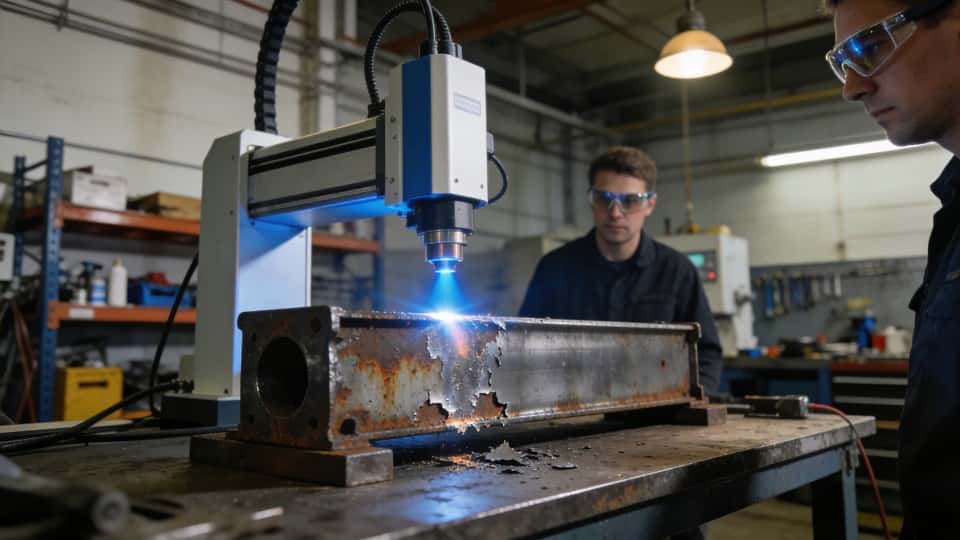
Laser cleaning is widely promoted as a clean, precise, and modern alternative to traditional surface preparation methods. In many applications, it delivers exceptional results—reduced consumables, minimal waste, and high process control. However, treating laser cleaning as a universal solution is a mistake. Like any industrial technology, it has clear limitations that must be understood before investment or large-scale deployment. When these limitations are ignored, users encounter disappointing productivity, unexpected costs, or safety and integration challenges. A realistic assessment of laser cleaning therefore requires not only an understanding of its strengths, but a detailed examination of where and why it falls short.
Laser cleaning is not limited by whether it works, but by where it works efficiently, economically, and safely. Its constraints are defined by material type, coating thickness, surface area, thermal sensitivity, capital cost, and operational discipline.
Table of Content
HIDE
The Nature of Laser Cleaning and Why Limitations Exist
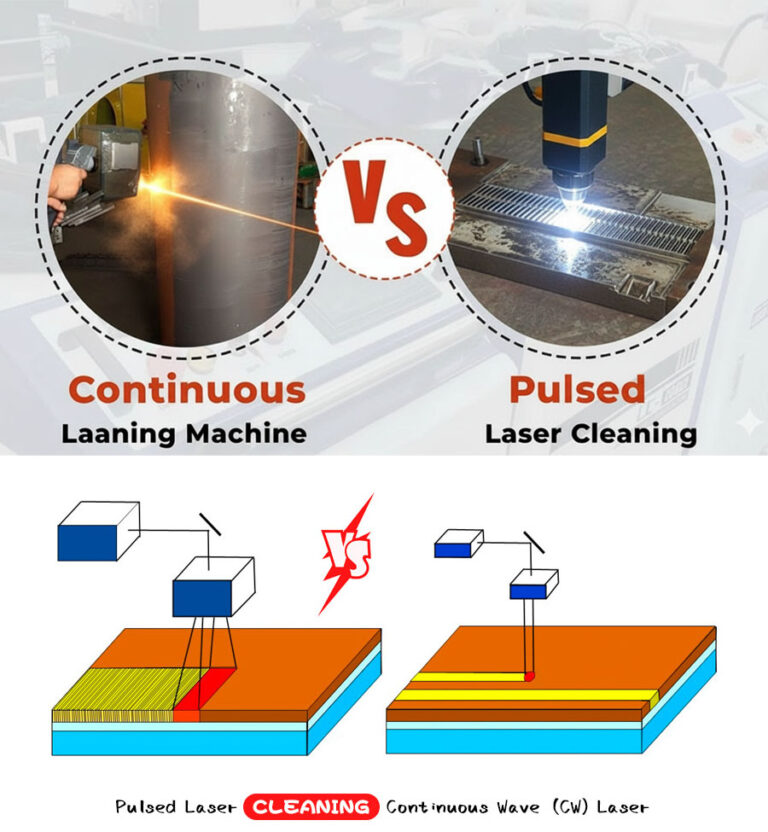
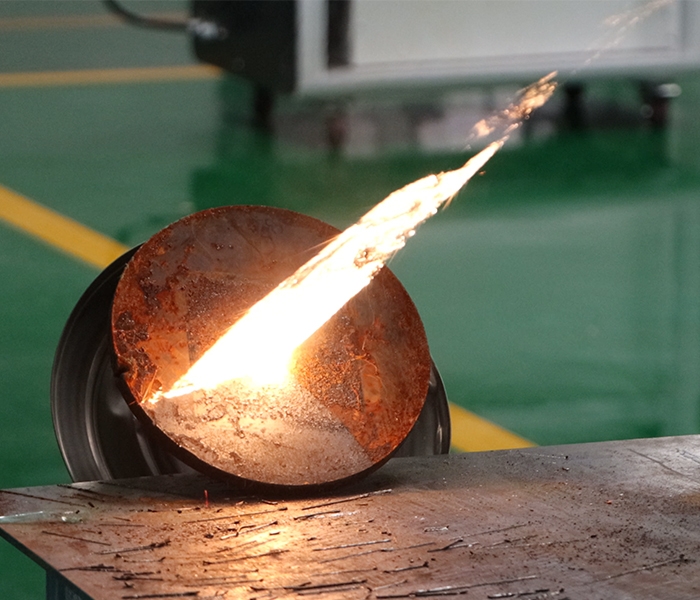
Laser cleaning operates by delivering controlled laser energy to a surface, causing contaminants or coatings to absorb energy and be removed through ablation, thermal shock, or vaporization. This mechanism is fundamentally different from abrasive or chemical cleaning. Because energy is delivered precisely and selectively, laser cleaning excels at high-value, controlled applications—but that same precision introduces constraints.
Laser energy must be:
- Correctly absorbed by the target layer
- Controlled to avoid damaging the substrate
- Delivered within thermal and safety limits
Whenever one of these conditions cannot be met efficiently, laser cleaning becomes less practical.
Limitation Related to Material Compatibility
Laser cleaning is not equally effective on all materials. Its efficiency depends heavily on optical absorption characteristics, thermal conductivity, and surface reflectivity.
Material Compatibility Overview
| Material Type | Laser Cleaning Effectiveness | Limitation Explanation |
|---|---|---|
| Carbon steel | Excellent | Strong absorption |
| Stainless steel | Good | Higher reflectivity |
| Aluminum | Moderate | High reflectivity |
| Copper & brass | Poor–moderate | Very high reflectivity |
| Plastics | Limited | Low thermal tolerance |
| Rubber & composites | Limited | Risk of degradation |
Highly reflective metals such as copper and aluminum reflect a significant portion of laser energy, reducing efficiency and increasing energy requirements. In such cases, laser cleaning may require higher power levels or specialized wavelengths, increasing cost and complexity.
Limitations with Thick or Multi-Layer Coatings
Laser cleaning performs best on thin, well-defined contamination layers. As coating thickness increases, efficiency decreases.
Coating Thickness vs Practicality
| Coating Thickness | Laser Cleaning Suitability |
|---|---|
| Light oxide / thin rust | Excellent |
| Paint layers (single) | Good |
| Multi-layer coatings | Moderate |
| Heavy corrosion scale | Limited |
| Thick elastomer coatings | Poor |
For very thick coatings or heavy corrosion, laser cleaning becomes time-consuming and energy-intensive. In such scenarios, abrasive blasting or mechanical removal may remain more economical for bulk removal, with laser cleaning reserved for finishing or precision areas.
Surface Area and Throughput Constraints
Laser cleaning is a point-by-point or scanned process. While modern scanning heads improve coverage, the fundamental physics remain unchanged.
Throughput Comparison by Surface Area
| Cleaning Method | Large Area Efficiency |
|---|---|
| Laser cleaning | Low–medium |
| Abrasive blasting | High |
| High-pressure water | High |
| Mechanical scraping | Medium |
Large, low-value surfaces—such as ship hulls or massive structural components—can exceed the economic throughput range of laser cleaning unless extremely high-power systems are deployed. This raises capital cost and infrastructure requirements.
Thermal Sensitivity and Substrate Risk
Laser cleaning relies on controlled heating. While it is non-contact, it is not non-thermal.
Substrate Sensitivity Considerations
| Substrate Type | Risk Level |
|---|---|
| Thick steel | Low |
| Thin sheet metal | Medium |
| Heat-treated components | Medium |
| Plastics & polymers | High |
| Electronic components | Very high |
Thin or heat-sensitive substrates can warp, discolor, or lose mechanical properties if laser parameters are poorly controlled. This requires skilled setup and parameter optimization, increasing operational complexity.
Capital Cost and Entry Barrier
One of the most cited limitations of laser cleaning is high upfront investment.
Cost Structure Comparison
| Cost Element | Laser Cleaning | Traditional Methods |
|---|---|---|
| Equipment cost | High | Low–medium |
| Consumables | Very low | High |
| Maintenance | Moderate | Low–medium |
| Training | Required | Minimal |
For low-utilization environments or price-driven markets, the capital cost may not be justifiable despite long-term savings.
Skill and Process Knowledge Requirements
Laser cleaning is not “plug-and-play” at an industrial level. Achieving optimal results requires understanding:
- Laser parameters
- Material response
- Safety procedures
Operators must be trained not only in machine operation, but in process control. In organizations without technical depth, this learning curve can slow adoption.
Safety and Regulatory Constraints
Laser cleaning introduces laser-specific safety requirements that are not present with traditional cleaning.
Safety Limitations
| Aspect | Limitation |
|---|---|
| Laser radiation | Requires controlled zones |
| Eye protection | Mandatory |
| Enclosures | Often required |
| Regulatory compliance | Jurisdiction-dependent |
These requirements can complicate deployment in open or shared workspaces.
Environmental and Power Infrastructure Requirements
High-power laser systems require:
- Stable electrical supply
- Adequate cooling
- Controlled ventilation
In remote or infrastructure-limited environments, these requirements can restrict feasibility.
Where Laser Cleaning Draws a Clear Line—and Where It Should Not Be Used
Laser cleaning performs best when precision, selectivity, and process control create tangible value. Its limitations become obvious when the task demands bulk removal at the lowest possible unit cost. Understanding this boundary is essential to avoid misapplication.
Scenarios Where Laser Cleaning Is Structurally Disadvantaged
| Scenario | Why Laser Cleaning Struggles |
|---|---|
| Massive, low-value surfaces | Throughput cost too high |
| Extremely thick, elastic coatings | Energy demand excessive |
| Highly reflective substrates | Absorption inefficiency |
| Uncontrolled outdoor environments | Safety & containment issues |
| Low-utilization operations | Capital recovery too slow |
In these cases, laser cleaning can still play a supporting role—for edges, critical interfaces, or final surface preparation—but rarely as the primary bulk-removal method.
Side-by-Side Limitations Versus Alternative Cleaning Technologies
Laser cleaning is often compared with other “modern” methods. Each has its own limitations, and profitability depends on matching constraints to requirements.
Limitations Comparison Matrix
| Technology | Core Limitation | Typical Consequence |
|---|---|---|
| Laser cleaning | Speed on large areas | Higher cost per m² |
| Dry ice blasting | Consumable dependency | Ongoing variable cost |
| High-pressure water | Water treatment | Environmental burden |
| Abrasive blasting | Substrate damage | Rework, waste |
| Chemical cleaning | Regulation & disposal | Compliance risk |
Laser cleaning’s limitation is not effectiveness, but economic throughput when scale and thickness dominate. In contrast, blasting and water excel at scale but sacrifice precision and cleanliness.
Why Many “Laser Cleaning Failures” Are Not Technology Failures
A significant number of reported disappointments with laser cleaning trace back to selection and expectation errors, not inherent technical shortcomings.
Common Misalignment Patterns
| Misalignment | Result |
|---|---|
| Underpowered machine | Slow cleaning |
| Overpowered CW system | Thermal damage |
| No fume extraction | Rapid optical degradation |
| Wrong wavelength | Poor absorption |
| No parameter development | Inconsistent results |
Laser cleaning is process-driven. When parameters are not matched to material, coating, and geometry, results suffer. This is not unique to lasers; it is simply more visible because laser processes are highly controllable—and unforgiving of shortcuts.
Infrastructure and Integration Constraints
Laser cleaning systems, especially at higher power levels, impose infrastructure requirements that may limit deployment flexibility.
Infrastructure Considerations
| Requirement | Limitation |
|---|---|
| Electrical supply | High peak load |
| Cooling capacity | Space and maintenance |
| Ventilation | Fume handling |
| Enclosures | Floor space |
| Safety zoning | Operational layout impact |
In legacy facilities or remote sites, these requirements can delay or complicate adoption unless addressed during planning.
Skill Dependency and Organizational Readiness
Laser cleaning shifts cleaning from a purely manual task to a controlled process. This raises the skill floor.
Organizational Readiness Factors
| Factor | Impact |
|---|---|
| Operator training | Required |
| Process documentation | Beneficial |
| Engineering support | Important |
| Maintenance discipline | Critical |
Organizations without technical ownership may find the learning curve challenging at first. However, once embedded, laser cleaning typically reduces long-term dependence on specialized manual skills.
Environmental and Regulatory Boundaries
While laser cleaning reduces secondary waste, it does not eliminate all environmental considerations.
Environmental Constraints
| Aspect | Limitation |
|---|---|
| Ablated fumes | Must be captured |
| Hazardous coatings | Specialized filtration |
| Noise | Generally low, but present |
| Power source | Carbon footprint varies |
In regulated environments, proper fume extraction and filtration are mandatory. Skipping these systems undermines both safety and optics lifespan.
Economic Boundaries: When the Numbers Do Not Add Up
Laser cleaning is capital-intensive. In low-margin, price-driven markets, its advantages may not translate into profit.
Situations with Weak Economics
| Situation | Economic Issue |
|---|---|
| Sporadic use | Long payback |
| Low labor cost regions | Reduced savings |
| Commodity cleaning | Weak value premium |
| Short-term contracts | Capital risk |
In these contexts, renting, subcontracting, or hybrid workflows often make more sense than ownership.
Designing Around the Limitations
Most limitations can be managed or mitigated with thoughtful system design.
Mitigation Strategies
| Limitation | Practical Mitigation |
|---|---|
| Low speed | Hybrid pre-cleaning |
| Reflective materials | Surface conditioning |
| Thermal sensitivity | Pulsed lasers |
| High capital cost | Right-sizing power |
| Skill gap | Process training |
Laser cleaning is most successful when treated as one tool in a broader process, not a one-size-fits-all replacement.
Technology Trajectory: Will These Limitations Disappear?
Advances in:
- Beam shaping
- Adaptive scanning
- Real-time monitoring
- Smarter control software
are gradually expanding laser cleaning’s effective range. However, physics-based constraints—energy density, absorption, and heat transfer—will remain. This means laser cleaning will continue to complement, not replace, other methods.
A Balanced Conclusion on Limitations
Laser cleaning’s limitations are not flaws; they are boundaries. When those boundaries are respected, laser cleaning delivers exceptional value. When they are ignored, frustration follows.
The technology excels where precision, cleanliness, and control matter. It struggles where brute-force removal at the lowest possible cost dominates. Understanding this distinction is the key to successful adoption.
A Practical, Candid Perspective
At BOGONG Machinery, we do not present laser cleaning as a cure-all. We evaluate applications honestly—identifying where laser cleaning delivers clear advantages and where alternative or hybrid solutions make more sense. That approach protects our customers’ investment and ensures long-term satisfaction.
If you are considering laser cleaning, the most important question is not “Can a laser remove this?” but “Should a laser remove this in my operation?”
Talk to BOGONG Machinery to assess laser cleaning realistically—based on limitations, not just capabilities—and build a solution that performs where it truly matters.
Talk to Bogong Laser Cleaning Machines ExpertsGet a Quote or Customized Solution for Your Application

-
Whatsapp: +86-15665870861
-
Email: info@bogongcnc.com