What are the main components and principles of a laser cleaning machine?
Industrial surface contamination—rust, oxides, paint, oil, carbon deposits, release agents—has traditionally been removed using abrasive blasting, chemical stripping, or mechanical grinding. These methods are effective but introduce secondary challenges: substrate damage, abrasive embedding, hazardous waste, dimensional loss, environmental regulation pressure, and inconsistent results. Laser cleaning machines were developed as a precision, non-contact, and environmentally responsible alternative. However, many buyers and engineers see only the external cabinet and handheld gun without understanding the internal engineering architecture and physical principles that make the system effective.
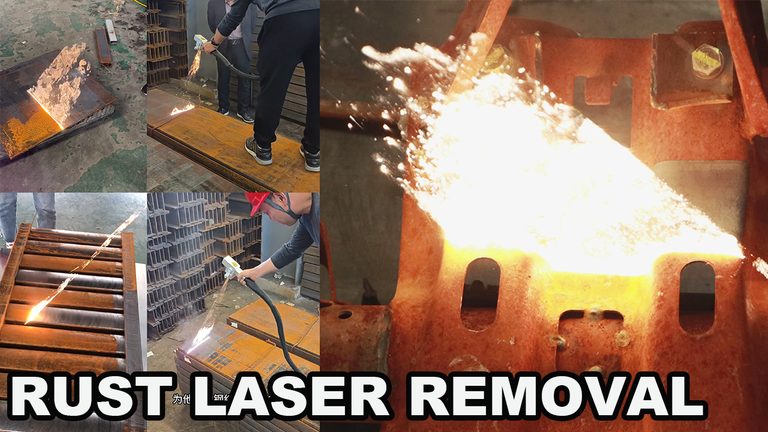
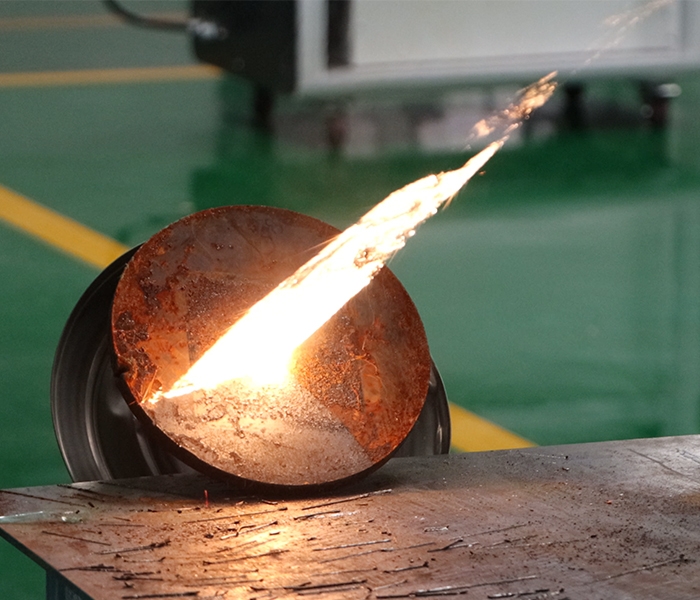
A laser cleaning machine operates by delivering high-energy laser pulses to a contaminated surface, where selective photothermal and photomechanical effects remove unwanted layers without damaging the underlying substrate. Its main components include a fiber laser source, beam delivery system, scanning head, control electronics, cooling unit, power supply, and fume extraction system. The principle of operation relies on controlled energy density exceeding the ablation threshold of contaminants while remaining below the damage threshold of the base material.
To fully understand this technology, we must examine the physical interaction principles, core hardware components, optical control architecture, thermal dynamics, safety systems, and industrial integration design.
Table of Content
HIDE
Fundamental Working Principle of Laser Cleaning
Laser cleaning is based on selective absorption and ablation.
Contaminant vs Substrate Energy Absorption
Different materials absorb laser energy differently at a given wavelength (commonly 1064 nm for fiber lasers).
| Material | Absorption at 1064 nm | Ablation Threshold |
|---|---|---|
| Iron Oxide (Rust) | High | Low |
| Paint (Dark Pigment) | Moderate–High | Moderate |
| Bare Steel | Lower | Higher |
| Aluminum | Lower | Higher |
When pulsed laser energy strikes the surface:
- Contaminant absorbs energy rapidly
- Temperature rises sharply
- Microplasma forms
- Rapid expansion causes delamination
- Contaminant detaches or vaporizes
The base metal remains below its melting threshold if parameters are properly tuned.
Photothermal and Photomechanical Effects
Laser cleaning relies on two primary mechanisms:
Photothermal Ablation
Rapid localized heating causes:
- Vaporization
- Thermal decomposition
- Layer-by-layer removal
Photomechanical Shock
Short pulse duration generates:
- Plasma micro-explosions
- Mechanical shockwaves
- Contaminant fracture
These combined effects detach rust, paint, or residues.
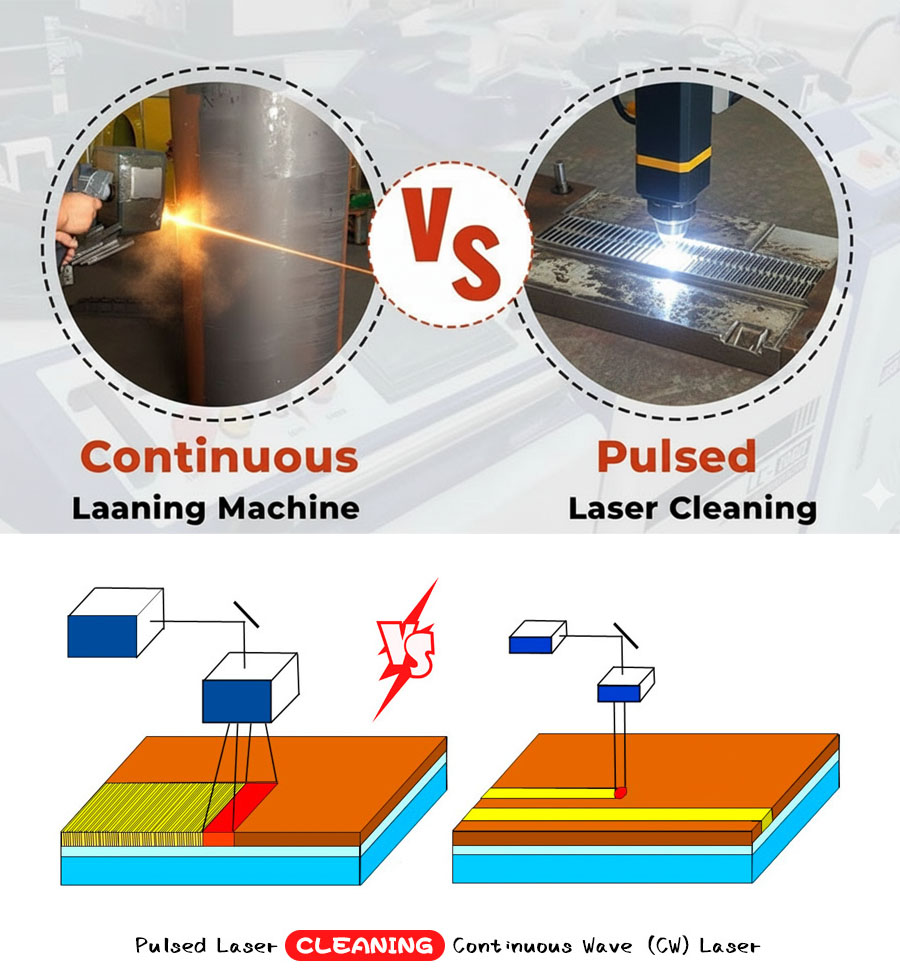
Pulse Duration Importance
| Pulse Type | Thermal Accumulation | Precision |
|---|---|---|
| Continuous Wave | High | Lower |
| Nanosecond Pulsed | Low | High |
| Picosecond/Femtosecond | Very Low | Ultra-High |
Most industrial laser cleaning machines use nanosecond pulsed fiber lasers.
Main Component 1: Fiber Laser Source
The laser source is the core energy generator.
Functions
- Converts electrical energy to coherent light
- Determines pulse energy and frequency
- Controls beam quality (M² value)
Key Specifications
| Parameter | Typical Industrial Value |
|---|---|
| Output Power | 500W–2000W |
| Pulse Energy | 1–20 mJ |
| Wavelength | 1064 nm |
| Beam Quality (M²) | <1.5 |
| Efficiency | 25–35% |
High-quality fiber laser sources ensure stable output and long service life (>100,000 hours).
Main Component 2: Beam Delivery System
The beam delivery system transmits laser energy from source to surface.
Includes
- Optical fiber cable
- Protective armored sheath
- Connectors and collimators
Fiber delivery offers flexibility and stability compared to mirror-based systems.
Main Component 3: Galvo Scanning Head
The galvo scanning head directs the beam rapidly across the surface.
Components Inside Galvo Head
- Two high-speed mirrors (X and Y axis)
- F-theta lens
- Protective optical window
Performance Metrics
| Parameter | Typical Range |
|---|---|
| Scanning Speed | 1–10 m/s |
| Spot Size | 0.05–2 mm adjustable |
| Position Accuracy | ±0.01 mm |
This enables controlled pattern scanning and uniform cleaning.
Main Component 4: Control System and Software
Modern laser cleaning machines use advanced digital control systems.
Functions
- Adjust pulse frequency
- Control scan speed
- Modify energy density
- Store preset cleaning modes
- Monitor system diagnostics
User interface allows selection of parameters based on material and contamination type.
Main Component 5: Cooling System
Laser systems generate heat that must be dissipated.
Cooling Types
| System Type | Application |
|---|---|
| Air Cooling | ≤1000W systems |
| Water Cooling (Chiller) | ≥1000W systems |
Proper cooling maintains:
- Laser stability
- Component lifespan
- Output consistency
Main Component 6: Power Supply and Electrical System
The electrical subsystem includes:
- Main power module
- Surge protection
- Voltage stabilization
- Circuit breakers
Industrial machines typically require:
| Power Level | Electrical Input |
|---|---|
| 500W | 220V single-phase |
| 1000W | 220–380V |
| 1500W+ | 380V three-phase |
Main Component 7: Fume Extraction and Filtration System
Laser ablation produces:
- Fine particulates
- Vaporized oxides
- Organic fumes (paint removal)
Industrial systems include:
- High-capacity vacuum
- HEPA filters
- Activated carbon filters
This ensures environmental safety and operator protection.
Safety Systems
Laser cleaning machines are classified as Class 4 laser systems.
Safety Features Include
- Emergency stop
- Interlock systems
- Protective eyewear
- Key-switch activation
- Enclosure options
Compliance with CE and safety standards is essential.
Energy Density Control Principle
Cleaning effectiveness depends on fluence (energy per unit area).
Fluence (J/cm²) = Pulse Energy / Spot Area
If fluence exceeds contaminant ablation threshold but remains below substrate threshold, selective removal occurs.
Example
| Parameter | Value |
|---|---|
| Pulse Energy | 10 mJ |
| Spot Diameter | 0.1 cm |
| Fluence | 1.27 J/cm² |
Proper calculation prevents substrate damage.
System Integration Architecture
A typical industrial laser cleaning system integrates:
- Laser cabinet
- Handheld gun or robotic arm
- Industrial control panel
- Cooling chiller
- Extraction unit
Integrated System Overview
| Module | Purpose |
|---|---|
| Laser Source | Energy generation |
| Scanner | Beam positioning |
| Controller | Parameter control |
| Cooling | Thermal stability |
| Extraction | Environmental safety |
Advantages Derived from Design Principles
Because of these components and principles, laser cleaning provides:
- Non-contact processing
- Minimal substrate loss
- No consumables
- High automation compatibility
- Repeatable performance
Comparison with Traditional Methods
| Feature | Sandblasting | Chemical Stripping | Laser Cleaning |
|---|---|---|---|
| Contact Method | Mechanical | Chemical | Non-contact |
| Waste Generation | High | High | Minimal |
| Substrate Damage Risk | Moderate | Low | Very Low |
| Automation | Difficult | Limited | High |
Industrial Scalability
Laser cleaning machines can be configured as:
- Portable handheld units
- Robotic integrated systems
- Automated conveyor systems
- Large-scale gantry systems
This flexibility expands application range.
Final Technical Conclusion
A laser cleaning machine is a precisely engineered system composed of a fiber laser source, beam delivery assembly, scanning head, digital control system, cooling architecture, electrical module, and fume extraction unit. Its operating principle relies on selective photothermal and photomechanical ablation—removing contaminants by exceeding their energy threshold without damaging the underlying substrate.
Understanding these components and principles allows engineers and buyers to evaluate system quality beyond external appearance. Performance depends on the interaction of optical physics, thermal management, mechanical precision, and intelligent control design.
Laser cleaning is not simply “light removing rust”—it is an advanced integration of photonics, materials science, and industrial engineering.
Let’s Design the Right System for Your Application
At BOGONG Machinery, we engineer industrial fiber laser cleaning systems with optimized pulse control, stable beam quality, robust cooling design, and intelligent scanning technology. Whether you require portable rust removal equipment or automated production-line integration, we provide complete system solutions—not just machines.
If you’re evaluating laser cleaning technology and want deeper technical consultation, contact BOGONG Machinery. Our engineering team will help you select the right configuration based on your material, contamination type, and production goals.
Talk to Bogong Laser Cleaning Machines ExpertsGet a Quote or Customized Solution for Your Application

-
Whatsapp: +86-15665870861
-
Email: info@bogongcnc.com