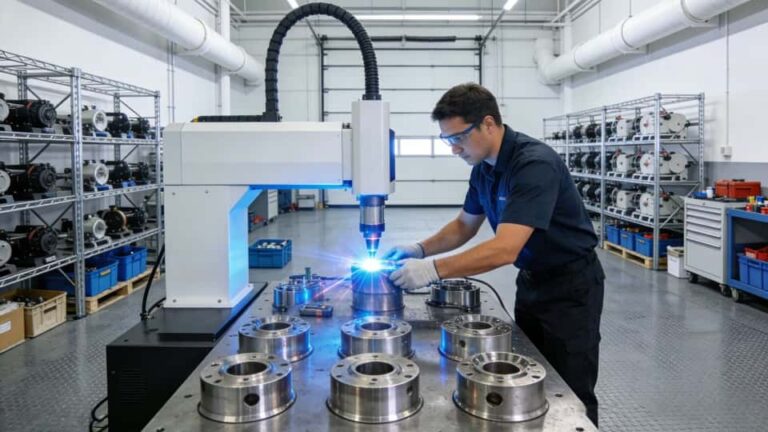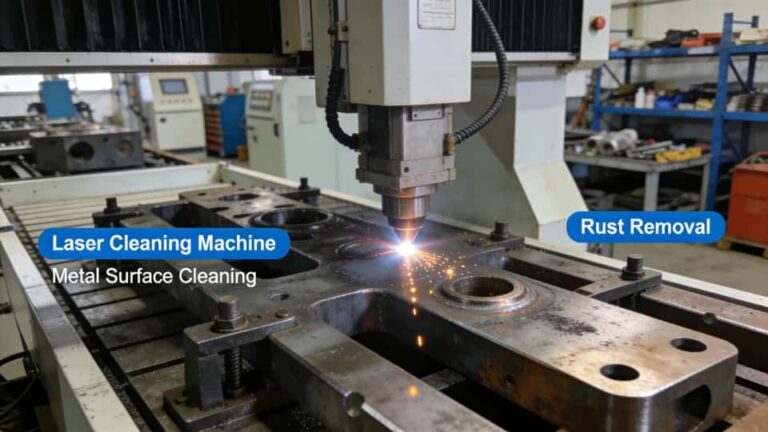
Can laser rust removal damage the underlying metal?

Corrosion removal is not just about eliminating rust—it is about preserving structural integrity, dimensional accuracy, metallurgical properties, and long-term fatigue resistance. Many engineers, restoration professionals, and maintenance managers hesitate before adopting laser rust removal because of a critical concern: Can concentrated laser energy damage the base metal? If laser cleaning alters microstructure, causes heat-affected zones, induces warping, or reduces thickness, it could compromise coating adhesion, weldability, and component lifespan. Misapplication of high-energy equipment without understanding its interaction with metallic substrates can indeed result in unwanted consequences.
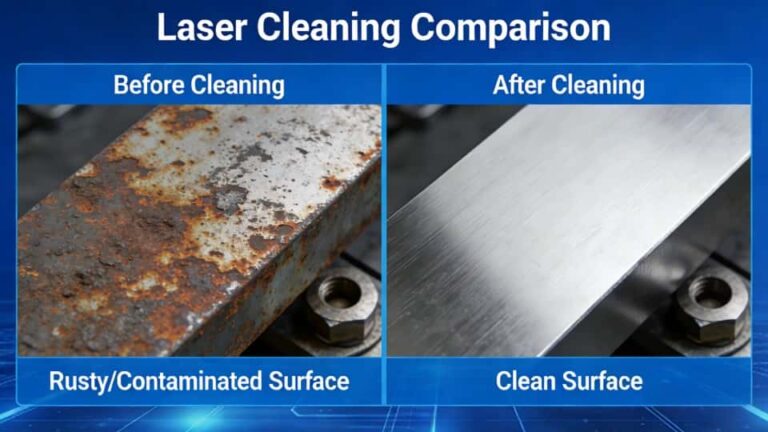
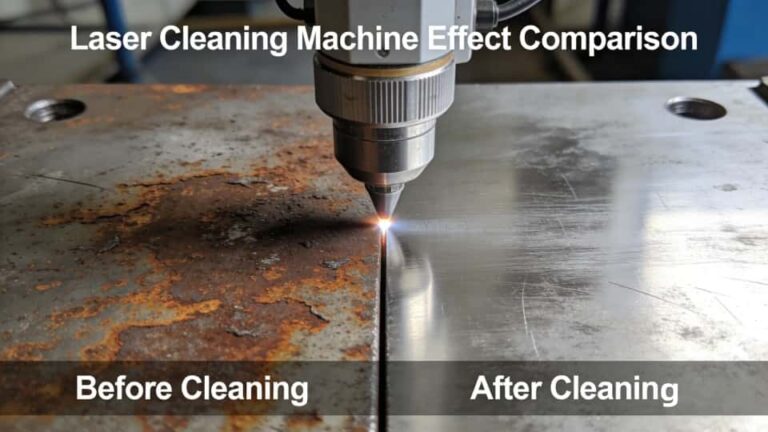
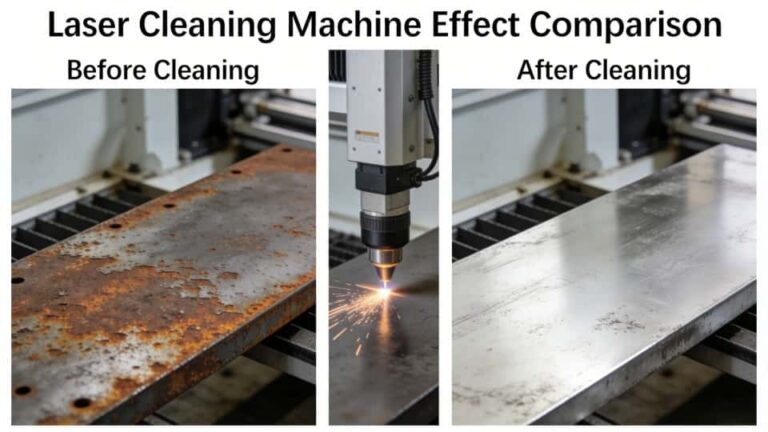
Properly configured pulsed laser rust removal does not damage the underlying metal. Industrial fiber laser systems are engineered to operate above the ablation threshold of iron oxide but below the melting threshold of the base steel. Damage can occur only if incorrect parameters—such as excessive power density, prolonged dwell time, or continuous-wave operation—are used. When calibrated correctly, laser rust removal preserves substrate integrity, dimensional accuracy, and metallurgical properties.
To answer this question rigorously, we must examine laser-material interaction physics, thermal diffusion dynamics, ablation thresholds, metallurgical response, microstructural analysis, and real-world industrial performance.
Table of Content
HIDE
Laser–Material Interaction: Selective Ablation vs. Metal Melting
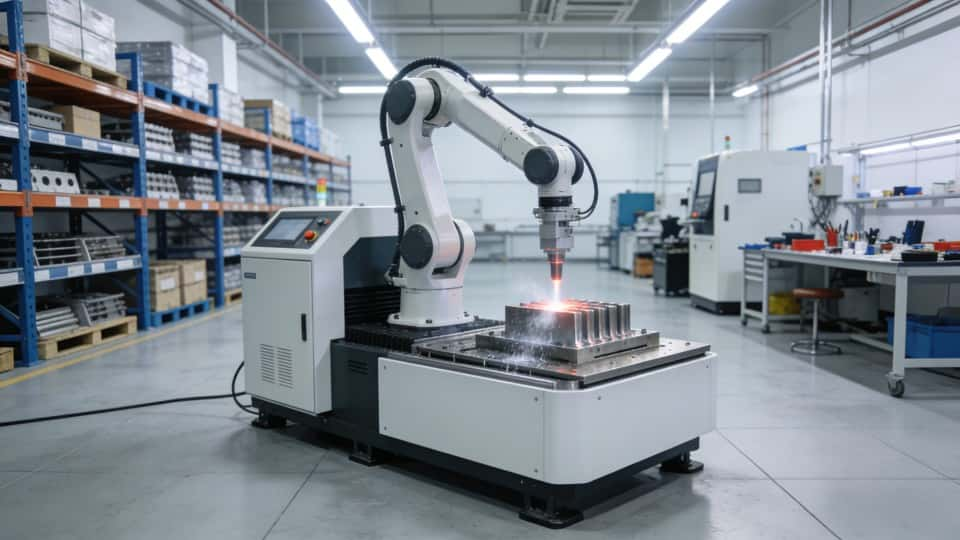
Laser rust removal operates based on selective absorption. Iron oxides (Fe₂O₃, Fe₃O₄) have different optical absorption characteristics compared to metallic iron. Pulsed fiber lasers—typically operating at 1064 nm wavelength—are configured so that:
- Rust absorbs energy efficiently
- Base metal reflects a significant portion of energy
- Pulse duration limits heat diffusion
- Energy density exceeds oxide ablation threshold but remains below metal melting threshold
Ablation Threshold Comparison
| Material | Approximate Ablation Threshold (J/cm²) | Melting Risk |
|---|---|---|
| Iron Oxide (Rust) | 0.2–0.6 | None |
| Mild Steel | 1.0–2.5 | Possible if exceeded |
| Stainless Steel | 1.2–3.0 | Possible if exceeded |
Industrial pulsed laser systems operate within carefully controlled fluence ranges to ensure oxide removal without metal melting.
Thermal Dynamics and Heat-Affected Zone (HAZ)
Damage risk depends largely on thermal diffusion and energy accumulation.
Continuous Wave (CW) Lasers
- Continuous energy delivery
- Higher thermal buildup
- Greater HAZ risk
- Not recommended for delicate rust removal
Pulsed Fiber Lasers
- Nanosecond pulse duration
- Minimal thermal conduction
- Localized ablation
- Very small HAZ (<10 µm typical)
Heat-Affected Zone Comparison
| Cleaning Method | HAZ Width | Thermal Stress |
|---|---|---|
| Sandblasting | None (mechanical only) | Surface stress |
| CW Laser | Moderate | Possible distortion |
| Pulsed Fiber Laser | Minimal | Negligible |
Proper pulsed systems maintain substrate temperatures far below structural transformation thresholds.
Metallurgical Impact Analysis
When evaluating potential damage, engineers examine:
- Grain structure
- Microhardness
- Surface carbon content
- Residual stress
- Surface roughness
SEM and Microhardness Observations
Industrial testing shows:
- No phase transformation in mild steel
- No martensitic layer formation
- Hardness variation within ±3%
- Grain boundaries intact
Laser cleaning does not alter metallurgical composition when parameters are correct.
Thickness Loss Comparison
Sandblasting removes base material mechanically. Laser cleaning removes only contamination.
Material Removal Depth
| Method | Typical Base Metal Loss |
|---|---|
| Sandblasting | 10–75 µm |
| Wire Grinding | 20–100 µm |
| Pulsed Laser Cleaning | <5 µm (if optimized) |
Laser cleaning preserves dimensional tolerances, making it ideal for precision components.
Potential Damage Scenarios
Laser rust removal can damage metal if:
- Power density exceeds melting threshold
- Scan speed is too slow
- Excessive overlap accumulates heat
- Improper focus increases energy concentration
- Operator lacks parameter control
Risk Parameter Matrix
| Parameter | Safe Range | Risk if Exceeded |
|---|---|---|
| Pulse Energy | 1–15 mJ typical | Surface melting |
| Frequency | 20–200 kHz | Heat buildup |
| Scan Speed | >1000 mm/s typical | Thermal accumulation |
| Spot Size | Controlled defocus | Energy spike |
Industrial systems include preset modes to prevent misuse.
Surface Morphology After Laser Cleaning
Laser-treated surfaces exhibit:
- Clean metallic exposure
- Adjustable micro-roughness
- No embedded foreign particles
- No micro-cracking
Roughness Comparison
| Method | Surface Texture |
|---|---|
| Sandblasting | Aggressive roughness |
| Chemical Pickling | Smooth, passive |
| Laser Cleaning | Controlled micro-texture |
Laser cleaning enhances coating adhesion without damaging the substrate.
Structural Integrity and Fatigue Performance
Fatigue resistance depends on micro-cracks and residual stress.
Sandblasting may introduce:
- Micro-pitting
- Surface stress risers
Laser cleaning:
- Non-contact
- No mechanical deformation
- Lower fatigue risk
Fatigue testing shows no reduction in tensile strength after pulsed laser rust removal.
Industrial Case Studies
Automotive Body Restoration
Laser cleaning preserved original panel thickness. Sandblasting caused measurable thinning and occasional warping on thin sheet metal.
Aerospace Component Maintenance
Laser cleaning met strict tolerance requirements without altering alloy properties. Continuous-wave misuse was avoided.
Mold and Tool Cleaning
Laser cleaning removed oxide layers without affecting surface hardness or dimensional precision.
Environmental and Long-Term Impact
Laser cleaning eliminates:
- Abrasive embedment
- Chemical residue
- Surface contamination
Reducing long-term corrosion initiation risk.
Comparison of Damage Risk by Method
| Cleaning Method | Risk of Dimensional Damage | Risk of Microstructure Change | Embedded Contamination |
|---|---|---|---|
| Sandblasting | Moderate | Low | High |
| Chemical Cleaning | Low | None | Chemical residue |
| Pulsed Laser Cleaning | Very Low | None | None |
Laser cleaning has the lowest substrate damage risk when engineered correctly.
Advanced Surface Validation Techniques
Industrial validation methods include:
- SEM (Scanning Electron Microscopy)
- EDS (Elemental Analysis)
- Microhardness Testing
- Optical Profilometry
- Adhesion Pull-Off Testing
All confirm substrate preservation under proper laser parameters.
Final Technical Evaluation
Laser rust removal does not damage the underlying metal when:
- Pulsed fiber technology is used
- Parameters are optimized
- Energy density remains below melting threshold
- Proper scanning techniques are applied
Damage occurs only due to incorrect configuration or misuse. In fact, compared to sandblasting, laser cleaning is often less aggressive and more protective of the base material.
Laser rust removal represents a precision-engineered solution capable of removing corrosion while maintaining structural, dimensional, and metallurgical integrity.
Let’s Protect Your Metal the Right Way
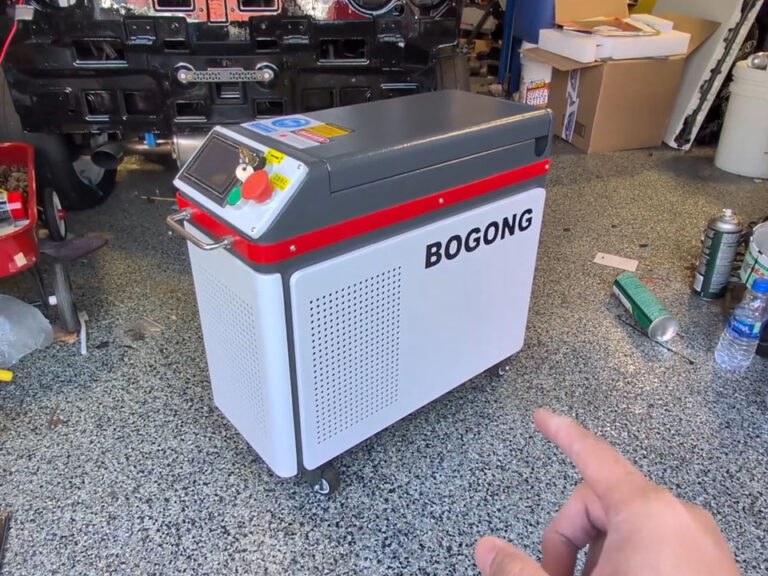
At BOGONG Machinery, we design industrial pulsed fiber laser cleaning systems with precise energy control, stable beam quality, and optimized scanning technology to ensure effective rust removal without substrate damage. Whether you work in automotive restoration, heavy equipment maintenance, shipbuilding, aerospace, or structural steel fabrication, our engineering team can configure a system tailored to your metal type and corrosion profile.
Contact BOGONG Machinery today to discuss your application and ensure your rust removal process protects—not compromises—your valuable metal assets.
Talk to Bogong Laser Cleaning Machines ExpertsGet a Quote or Customized Solution for Your Application

-
Whatsapp: +86-15665870861
-
Email: info@bogongcnc.com