Do cheap laser cleaners work?
If you are considering buying a cheap laser cleaning machine, you are likely facing a practical dilemma: traditional rust removal methods are messy, labor-intensive, environmentally unfriendly, and costly in the long term. Sandblasting creates dust and media waste, chemical cleaning introduces hazardous disposal issues, and manual grinding damages substrates. Low-priced laser cleaners promise a “clean, fast, contactless” solution at a fraction of the cost of premium systems. But here is the risk: if the machine underperforms, you waste capital, compromise production efficiency, and possibly damage valuable components. The wrong purchasing decision can cost far more than the initial savings.
Yes, cheap laser cleaners can work—but only within strict technical limits. Most low-cost systems are low-power pulse fiber laser units (100W–300W) designed for light rust, thin paint layers, and surface contaminants. They are not suitable for heavy corrosion, thick coatings, high-speed industrial production, or precision aerospace cleaning. The real question is not whether they work, but whether they match your application, throughput requirements, and safety standards.
To make an informed investment decision, you must evaluate cheap laser cleaners from an engineering perspective: laser source type, pulse energy, beam quality (M²), cleaning efficiency per square meter, cooling system stability, optical scanning architecture, safety compliance, and lifecycle cost. The following technical guide will dissect each factor with practical data, engineering insights, and comparative analysis.
Table of Content
HIDE
What Defines a “Cheap” Laser Cleaning Machine?
In the global industrial market, pricing tiers typically break down as follows:
| Category | Typical Power Range | Price Range (USD) | Typical Application | Target User |
|---|---|---|---|---|
| Entry-Level (Cheap) | 100W–300W Pulse | $3,000–$8,000 | Light rust, oil removal, surface prep | Small workshops |
| Mid-Range Industrial | 500W–1000W Pulse | $10,000–$25,000 | Moderate rust, paint removal | Fabrication plants |
| High-Power Continuous | 1000W–3000W CW | $20,000–$50,000 | Heavy corrosion, thick coatings | Heavy industry |
| Premium Smart Systems | 1000W+ Pulse | $40,000+ | Aerospace, mold cleaning, automation | OEM production lines |
Cheap laser cleaners usually belong to the first category. They typically use:
- Entry-level fiber laser source
- Limited pulse energy (1–2 mJ)
- Simplified air cooling or basic water cooling
- Entry-level galvo scanning head
- Minimal safety enclosure
These machines are engineered for affordability, not industrial endurance.
Performance Comparison: Cheap vs Industrial Laser Cleaners
| Parameter | Cheap 200W Pulse | Industrial 1000W Pulse |
|---|---|---|
| Average Power | 200W | 1000W |
| Pulse Energy | 1–2 mJ | 10–20 mJ |
| Cleaning Speed (Light Rust) | 1–2 m²/hr | 6–10 m²/hr |
| Cleaning Speed (Heavy Rust) | Not Recommended | 3–5 m²/hr |
| Cooling System | Air / Basic Water | Industrial Water Cooling |
| Continuous Operation | 2–3 hrs max | 8–16 hrs industrial duty |
| Expected Lifespan | 8,000–15,000 hrs | 50,000–100,000 hrs |
| Safety Integration | Basic goggles | Full CE/FDA system |
From a physics standpoint, cleaning efficiency depends on peak power density. Low-cost systems have limited pulse energy, meaning they struggle to ablate thick oxides efficiently.
Where Cheap Laser Cleaners Actually Work
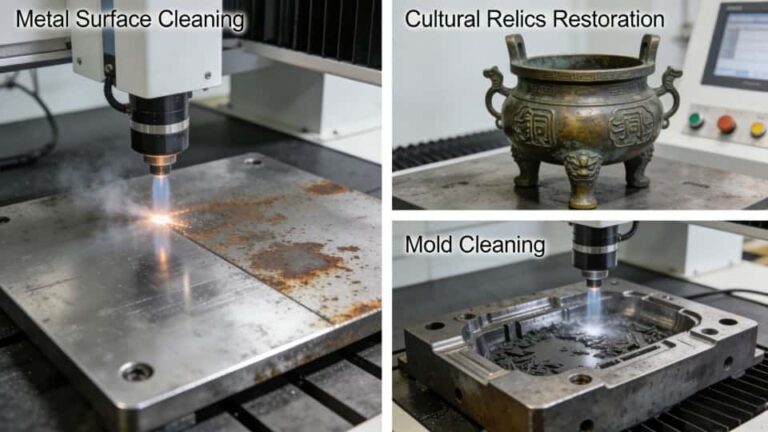
Cheap laser cleaners are technically effective under these controlled scenarios:
Light Surface Oxidation
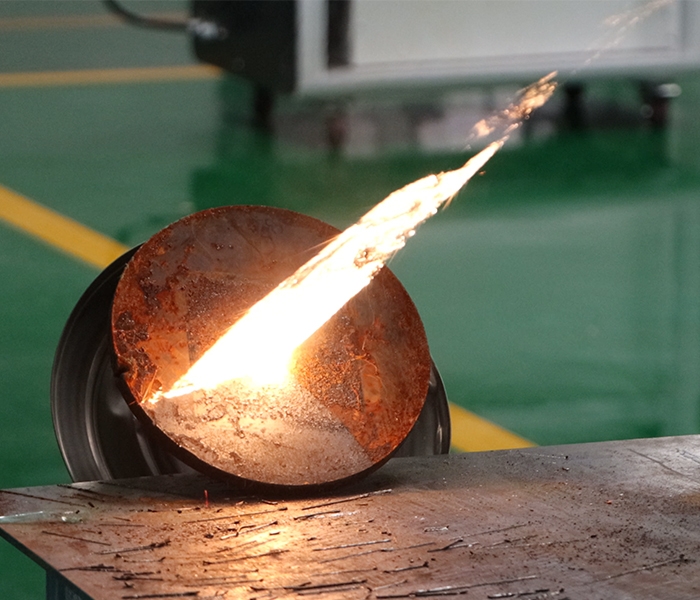
Thin flash rust (<50 μm oxide layer) on mild steel can be removed effectively.
Oil and Grease Removal
Laser desorption works efficiently for organic contaminants.
Pre-Welding Surface Preparation
Low-power pulsed lasers provide oxide-free weld seams without damaging substrate.
Mold Surface Cleaning
If contamination is shallow and not carbonized.
However, they are unsuitable for:
- Heavy marine corrosion
- Multi-layer epoxy coatings
- Ship hull refurbishment
- Thick automotive underbody rust
- Structural steel restoration
Cleaning Efficiency by Contamination Type
| Contamination Type | Cheap Laser (200W) | Industrial Laser (1000W) |
|---|---|---|
| Light Rust | Effective | Highly Efficient |
| Thick Rust | Inefficient | Effective |
| Thin Paint | Slow | Efficient |
| Thick Paint (>300μm) | Not Practical | Possible |
| Oil / Grease | Very Effective | Very Effective |
| Oxide Scale | Limited | Effective |
| Heavy Carbon Deposits | Not Suitable | Moderate |
The difference lies in energy density and repetition frequency stability.
Hidden Engineering Compromises in Cheap Machines
Laser Source Quality
Premium brands use high-stability fiber sources with narrow linewidth and consistent pulse shaping. Cheap systems often use lower-grade laser modules with fluctuating pulse characteristics.
Galvo Scanner Precision
Lower-cost scanners may suffer from beam distortion at higher speeds, reducing uniform cleaning.
Cooling Stability
Inadequate cooling leads to thermal drift, power fluctuation, and premature component aging.
Control Software
Entry systems lack adjustable pulse shaping profiles for delicate substrates like aluminum or composites.
Real Cost of Ownership
Initial price does not equal total cost. Consider:
| Cost Factor | Cheap Machine | Industrial Machine |
|---|---|---|
| Purchase Price | Low | High |
| Maintenance | Higher risk | Lower |
| Downtime | Higher probability | Minimal |
| Productivity | Limited | High |
| Resale Value | Low | Moderate |
| ROI Period | Longer | Faster |
In many industrial cases, a 1000W system pays back within 12–18 months due to throughput advantage.
Safety Considerations
Laser cleaning operates typically in Class 4 category. Cheap machines sometimes lack:
- Proper interlock systems
- Certified laser protective housing
- CE or FDA compliance documentation
- Adequate fume extraction integration
Laser cleaning produces vaporized particulate matter. Without industrial filtration, operators face inhalation risks.
Practical Buying Decision Matrix
| Application Scenario | Recommended Power |
|---|---|
| Jewelry cleaning | 100W |
| Light workshop rust | 200W |
| Automotive restoration | 500W |
| Structural steel | 1000W+ |
| Shipyard corrosion | 1500W+ CW |
| Aerospace precision cleaning | High-end pulsed system |
If your application is occasional light cleaning in a small workshop, a cheap laser cleaner can absolutely work. If you are running a production facility, it will become a bottleneck.
Case Example: Small Fabrication Workshop
A local steel workshop using a 200W pulse laser removed light rust on pre-weld components. Their workload was 20 parts/day. The machine performed adequately. However, when corrosion thickness increased during humid season, cleaning time doubled. They later upgraded to 1000W, reducing labor time by 65%.
The Physics Behind It
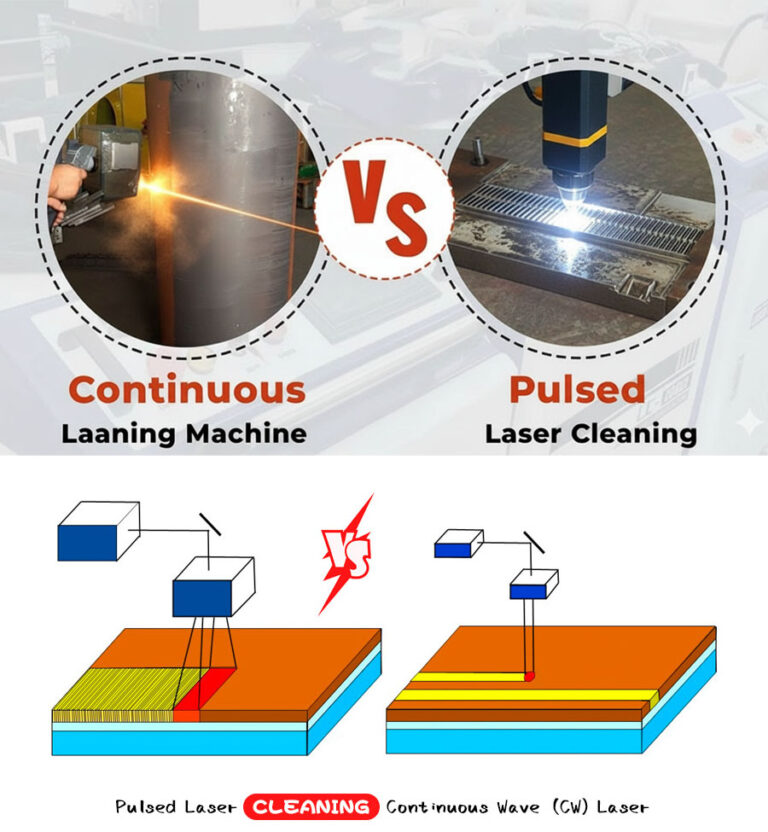
Laser cleaning works through selective photothermal and photomechanical ablation. Energy absorption differs between substrate and contaminant. If peak power is insufficient, ablation threshold is not reached, leading to slow removal.
Peak power = Pulse Energy / Pulse Duration
Cheap machines have lower pulse energy, therefore lower peak power.
When Cheap Laser Cleaners Make Sense
- Budget under $8,000
- Intermittent use
- Light-duty applications
- Non-critical components
- Experimental or hobby use
When They Don’t
- Heavy industrial scale
- Continuous production lines
- Thick corrosion removal
- Strict compliance industries
- Time-sensitive contracts
Final Engineering Verdict
Cheap laser cleaners do work—but within narrow performance boundaries. They are not “bad,” they are simply limited by physics and engineering cost compromises. The key is matching machine specification with contamination type, substrate sensitivity, cleaning speed requirement, and operational duty cycle.
Overestimating a cheap machine’s capability leads to frustration. Underestimating your workload leads to lost productivity. The optimal choice is specification-driven, not price-driven.
Ready to Choose the Right Laser Cleaning System?
If you want honest technical advice—not sales hype—talk to BOGONG Machinery. We analyze your substrate, contamination thickness, cleaning area per hour, and budget before recommending the correct power configuration.
Contact BOGONG Machinery today for a tailored laser cleaning solution that truly fits your application and maximizes your ROI.
Talk to Bogong Laser Cleaning Machines ExpertsGet a Quote or Customized Solution for Your Application

-
Whatsapp: +86-15665870861
-
Email: info@bogongcnc.com