Do I Need Special Training to Use a Laser Rust Remover?
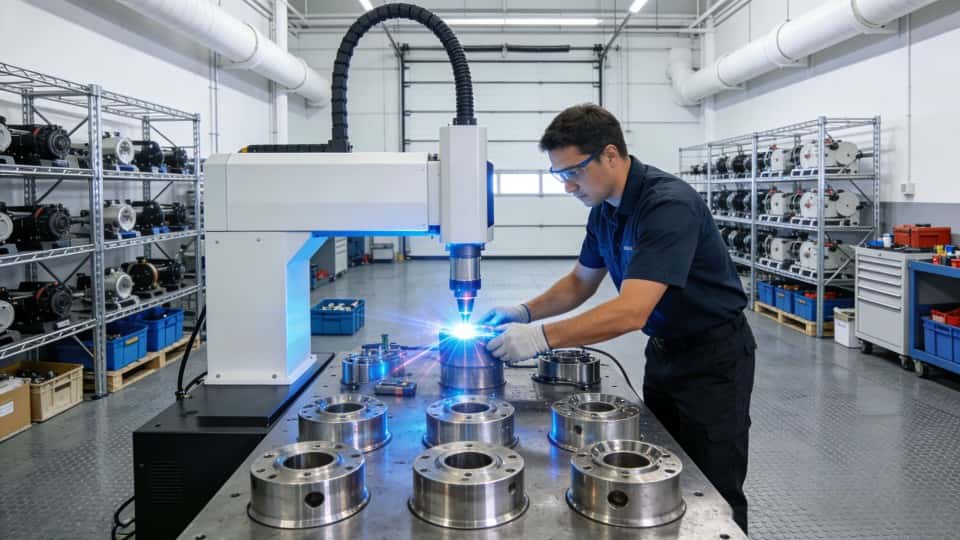
Many buyers assume that a laser rust remover works like a pressure washer—just point and clean. Unfortunately, that assumption is exactly what leads to damaged substrates, reduced laser lifespan, inconsistent cleaning results, safety violations, and in severe cases, permanent eye injury. A laser rust removal machine is a Class 4 industrial laser system, not a household tool. It combines high peak power density, precise optical control, electronic modulation, and thermal interaction with metal surfaces. Without structured training, operators may unknowingly overheat steel, alter surface microstructure, contaminate optics, or expose themselves and others to invisible infrared radiation. The question is not whether training is “recommended”—the real question is how much training is required to operate safely, efficiently, and profitably.
Yes, special training is required to use a laser rust remover safely and effectively. Industrial laser rust removal machines—especially pulsed fiber systems from 100W to 2000W—are classified as high-risk Class 4 lasers. Operators must understand laser safety protocols, wavelength-specific eye protection, beam-material interaction, parameter calibration (power, frequency, pulse width, scanning speed), ventilation requirements, optical maintenance, and emergency procedures. Proper training ensures consistent cleaning quality, prevents substrate damage, protects equipment lifespan, and guarantees compliance with industrial laser safety standards such as IEC 60825-1.
If your goal is professional rust removal—whether for automotive restoration, shipbuilding, structural steel refurbishment, mold cleaning, or heavy equipment maintenance—training directly affects productivity and return on investment. At BOGONG Machinery, we have delivered thousands of laser cleaning systems globally, and operational success correlates strongly with structured operator education. Below is a detailed technical explanation of why training is necessary and what it must include.
Table of Content
HIDE
Understanding What a Laser Rust Remover Actually Does
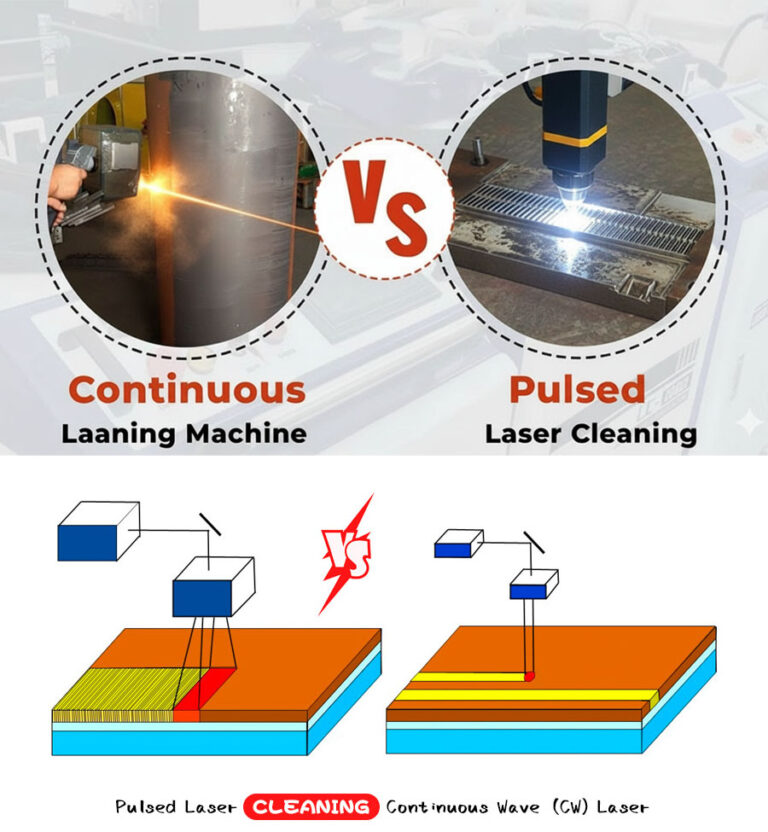
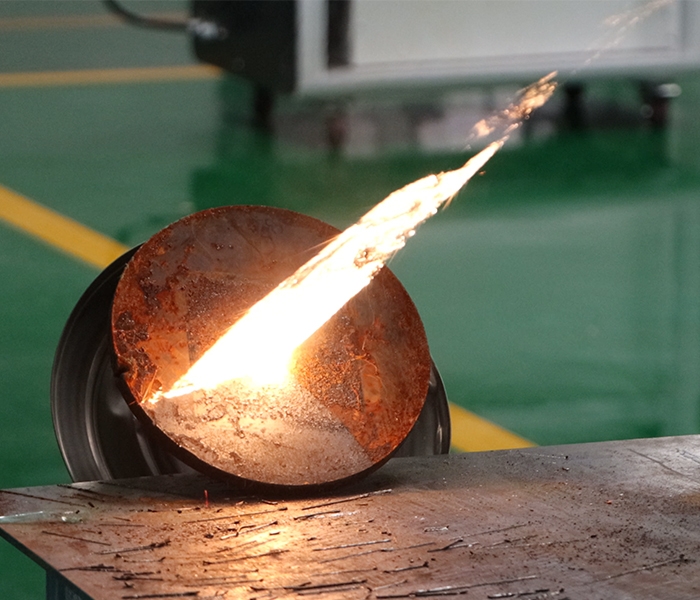
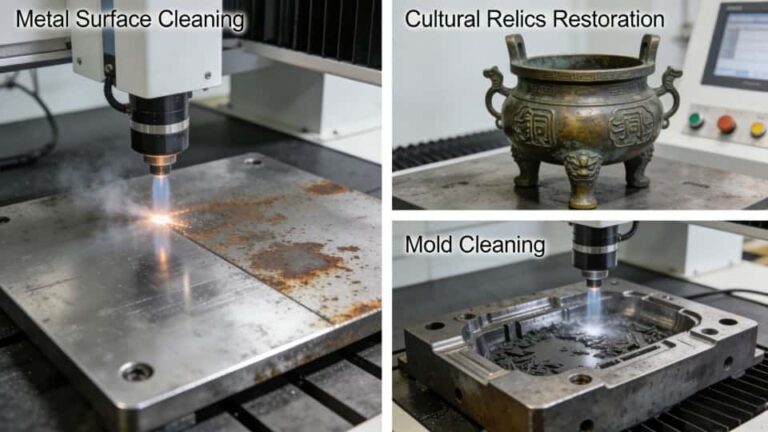
A laser rust remover typically uses a pulsed fiber laser at 1064 nm wavelength. The mechanism relies on selective absorption: rust (iron oxide) absorbs laser energy more efficiently than the steel substrate. When pulsed energy is delivered at high peak power, the oxide layer undergoes rapid thermal expansion and micro-explosive ablation, detaching from the base metal.
However, laser-material interaction depends on:
- Energy density (J/cm²)
- Pulse duration (nanoseconds)
- Repetition frequency (kHz)
- Beam spot size
- Scan overlap ratio
- Surface reflectivity
- Thermal conductivity of the substrate
Without understanding these variables, operators risk damaging the base material.
Typical Industrial Laser Rust Removal Parameters
| Laser Power | Frequency Range | Pulse Width | Cleaning Width | Application Scope |
|---|---|---|---|---|
| 100W | 20–200 kHz | 100–200 ns | 10–80 mm | Light rust, precision parts |
| 300W | 20–200 kHz | 100–200 ns | 10–120 mm | Medium corrosion |
| 1000W | 20–500 kHz | 100–150 ns | 20–150 mm | Heavy rust, industrial steel |
| 2000W | 20–500 kHz | 100–150 ns | 50–200 mm | Thick oxide scale |
Training teaches operators how to select these parameters correctly.
Why Laser Safety Training Is Mandatory
Laser rust removers fall under Class 4 classification. Class 4 lasers are hazardous from both direct and reflected beams. Infrared radiation at 1064 nm is invisible, meaning the blink reflex does not protect the eye.
Laser Safety Risks
| Hazard Type | Risk Description |
|---|---|
| Eye Damage | Retinal burns, permanent blindness |
| Skin Burns | Thermal injury |
| Fire | Ignition of flammable materials |
| Toxic Fumes | Rust particles and coating vapors |
| Electrical Shock | High-voltage components |
Operators must understand:
- Optical density (OD) rating of safety goggles
- Safe beam distance
- Reflection risk from metal surfaces
- Controlled work zones
- Emergency shutdown procedures
No professional facility operates Class 4 lasers without documented training.
Operational Training: Parameter Control and Surface Integrity
Laser rust removal is not about “maximum power.” It is about controlled energy deposition.
Parameter Adjustment Matrix
| Rust Condition | Power Level | Frequency | Scan Speed | Risk if Incorrect |
|---|---|---|---|---|
| Light Surface Rust | Low | Medium | High | Inefficient cleaning |
| Moderate Rust | Medium | Medium | Medium | Surface discoloration |
| Heavy Scale | High | Lower frequency | Slow | Substrate overheating |
Training ensures operators avoid:
- Excessive heat input
- Surface pitting
- Microstructural changes
- Reduced adhesion for repainting
Improper parameter control can alter metallurgical properties of carbon steel.
Optical System Handling and Maintenance Training
Laser cleaning machines include:
- Fiber laser source
- Galvo scanning head
- Protective lens
- Collimator
- Focusing optics
Rust ablation generates fine particulates that may contaminate lenses.
Optical Maintenance Schedule
| Component | Inspection Frequency | Risk if Neglected |
|---|---|---|
| Protective Lens | Daily | Reduced beam quality |
| Galvo Window | Weekly | Beam distortion |
| Fiber Connector | Monthly | Power instability |
| Cooling Filters | Monthly | Overheating |
Training teaches safe lens cleaning procedures using optical-grade wipes and alcohol.
Environmental and Ventilation Training
Laser rust removal produces iron oxide particles and potential toxic residues from coatings.
Industrial ventilation requirements:
- HEPA filtration
- Negative pressure airflow
- Fume extraction hood
- Spark-resistant ducting
Without training, operators may neglect ventilation setup, increasing respiratory risk.
Electrical and Cooling System Knowledge
Fiber laser systems require stable cooling and power supply.
Cooling Requirements
| Parameter | Recommended Range |
|---|---|
| Water Temperature | 20–25°C |
| Conductivity | <5 µS/cm |
| Flow Rate | 10–20 L/min |
Operators must monitor:
- Chiller alarms
- Temperature stability
- Voltage fluctuation
- Grounding integrity
Training prevents premature laser source failure.
Productivity and ROI Impact of Training
Well-trained operators:
- Reduce cleaning time
- Avoid rework
- Extend equipment lifespan
- Improve coating adhesion after cleaning
- Reduce maintenance cost
Cost Impact Comparison
| Scenario | Equipment Damage Risk | Cleaning Efficiency | ROI |
|---|---|---|---|
| Untrained Operator | High | Inconsistent | Low |
| Trained Operator | Low | Optimized | High |
Industrial buyers should view training as an investment.
Legal and Regulatory Considerations
In many countries:
- Laser Safety Officer (LSO) certification may be required.
- Workplace laser safety audits are mandatory.
- PPE documentation is required.
- Compliance with IEC 60825-1 or ANSI Z136 standards applies.
Insurance providers may require documented operator training.
What Proper Training Includes
Professional laser rust removal training should cover:
- Laser classification and hazard awareness
- PPE selection and usage
- Parameter optimization practice
- Sample surface testing
- Optical maintenance
- Ventilation management
- Electrical safety
- Emergency shutdown procedures
- Quality inspection after cleaning
- Routine preventive maintenance
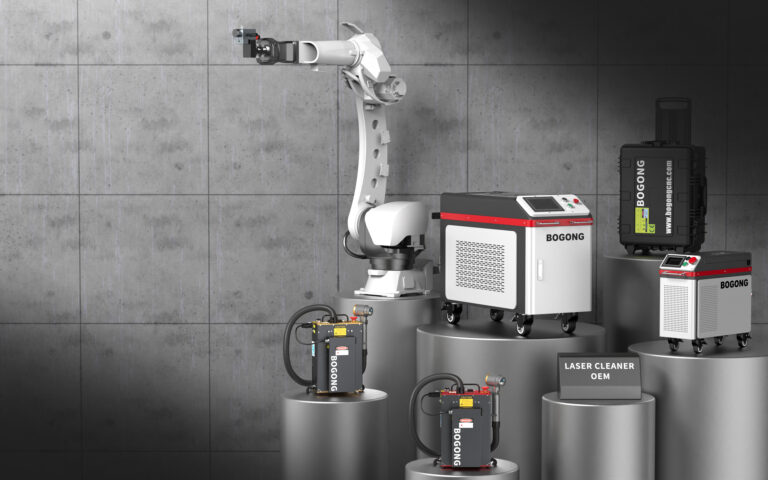
At BOGONG Machinery, our training program includes hands-on demonstrations, parameter calibration exercises, maintenance workshops, and safety briefings.
Is Training Difficult?
Not necessarily. Most industrial operators can become competent within:
- 1–2 days for basic operation
- 3–5 days for advanced optimization
- 1 week for comprehensive process mastery
However, skipping training entirely is not advisable.
Who Needs Advanced Training?
- Shipyard maintenance teams
- Automotive restoration professionals
- Aerospace component refurbishers
- Mold cleaning specialists
- Heavy equipment refurbishers
Advanced applications require deeper understanding of metallurgical response.
Can Small Workshops Operate Without Formal Training?
Even small workshops must understand:
- Laser reflection hazards
- Eye protection
- Fire risk
- Ventilation
Basic training is always required.
The Difference Between Hobby Use and Industrial Use
Low-power handheld units still fall under hazardous classification. Even at 100W, eye injury risk exists. Industrial environments demand higher standards.
Final Assessment: Is Training Mandatory?
From a professional standpoint:
- For safe operation → Yes
- For optimal cleaning quality → Yes
- For protecting equipment investment → Yes
- For legal compliance → Often Yes
Laser rust removal is precision engineering—not guesswork.
Conclusion
A laser rust remover is a powerful, efficient, and environmentally friendly tool—but it is also a high-energy industrial system that demands proper training. The operator must understand laser physics, parameter calibration, optical maintenance, safety compliance, and environmental management. Skipping training increases the risk of injury, equipment damage, and inconsistent cleaning results. Companies that invest in structured training maximize equipment lifespan, improve surface preparation quality, and achieve superior return on investment.
Let’s Make Sure You Use It the Right Way – BOGONG Machinery
If you are considering purchasing a laser rust removal machine—or already own one but want to improve performance—we are ready to support you.
At BOGONG Machinery, we provide:
• Complete operator training programs
• On-site or remote technical guidance
• Parameter optimization support
• Laser safety documentation
• Preventive maintenance manuals
• Factory-direct industrial laser cleaning systems
Our goal is not only to supply equipment—but to ensure you use it safely, efficiently, and profitably.
Contact BOGONG Machinery today, and let’s build your laser rust removal operation on a foundation of knowledge and precision.
Talk to Bogong Laser Cleaning Machines ExpertsGet a Quote or Customized Solution for Your Application

-
Whatsapp: +86-15665870861
-
Email: info@bogongcnc.com