How do professionals remove rust?
Rust is not just a cosmetic defect—it is a progressive electrochemical reaction that weakens steel, reduces structural integrity, contaminates weld seams, compromises coating adhesion, and shortens equipment lifespan. When rust spreads across structural beams, molds, heavy machinery, pipelines, vehicles, or ship hulls, it becomes a serious operational and financial liability. Many non-professional approaches—household chemicals, grinding discs, or improvised blasting—may temporarily remove surface oxidation but often leave micro-pits, residual corrosion, or damaged substrates. In industrial environments, rust removal must meet strict standards for surface cleanliness, roughness control, metallurgical preservation, and coating preparation. That is why professionals rely on engineered rust removal systems based on material science, surface preparation standards, and controlled process parameters rather than guesswork.
Professionals remove rust using engineered methods selected according to substrate type, corrosion severity, environmental regulations, and surface preparation requirements. The most common professional methods include abrasive blasting (sandblasting or media blasting), laser rust removal (pulse fiber laser ablation), chemical rust removal (acid pickling or rust converters), mechanical grinding and brushing, high-pressure water jetting, and electrolytic derusting. Modern industrial sectors increasingly prefer laser cleaning due to its precision, minimal substrate damage, environmental compliance, and long-term cost efficiency. The chosen method depends on corrosion grade, project scale, regulatory requirements, and surface finish specifications such as ISO 8501 or SSPC standards.
Understanding how professionals approach rust removal requires examining the corrosion mechanism itself and the technical decision framework used in industry.
Table of Content
HIDE
Understanding Rust: The Technical Foundation of Professional Removal
Rust forms when iron reacts with oxygen and moisture, producing iron oxides (Fe₂O₃ and Fe₃O₄). The corrosion process accelerates in the presence of:
- Salt (marine environments)
- Acidic atmospheres
- Industrial pollution
- High humidity
- Mechanical coating damage
Professionals evaluate rust severity using internationally recognized standards.
Rust Classification (ISO 8501-1 Surface Preparation Standard)
| Rust Grade | Description |
|---|---|
| A | Steel surface largely covered with mill scale |
| B | Steel surface beginning to rust |
| C | Steel surface with widespread rust |
| D | Steel surface with heavy pitting corrosion |
The removal strategy depends on whether the steel requires light cleaning or complete restoration.
Abrasive Blasting (Sandblasting and Media Blasting)
For decades, abrasive blasting has been the dominant professional rust removal method. It uses compressed air to propel abrasive particles at high velocity.
Common Abrasive Media
| Media Type | Application | Surface Profile |
|---|---|---|
| Garnet | Structural steel | Medium |
| Steel Grit | Heavy corrosion | Rough |
| Aluminum Oxide | Hard metals | Aggressive |
| Glass Beads | Surface finishing | Smooth |
Advantages
- Fast for large areas
- Creates surface roughness for coatings
- Effective for thick scale
Disadvantages
- High dust generation
- Media consumption cost
- Surface erosion risk
- Environmental disposal issues
Professional blasting must meet standards such as SSPC-SP10 (Near-White Metal Blast Cleaning).
Laser Rust Removal (Modern Precision Method)
Laser cleaning has become one of the most advanced professional rust removal technologies.
How Laser Rust Removal Works
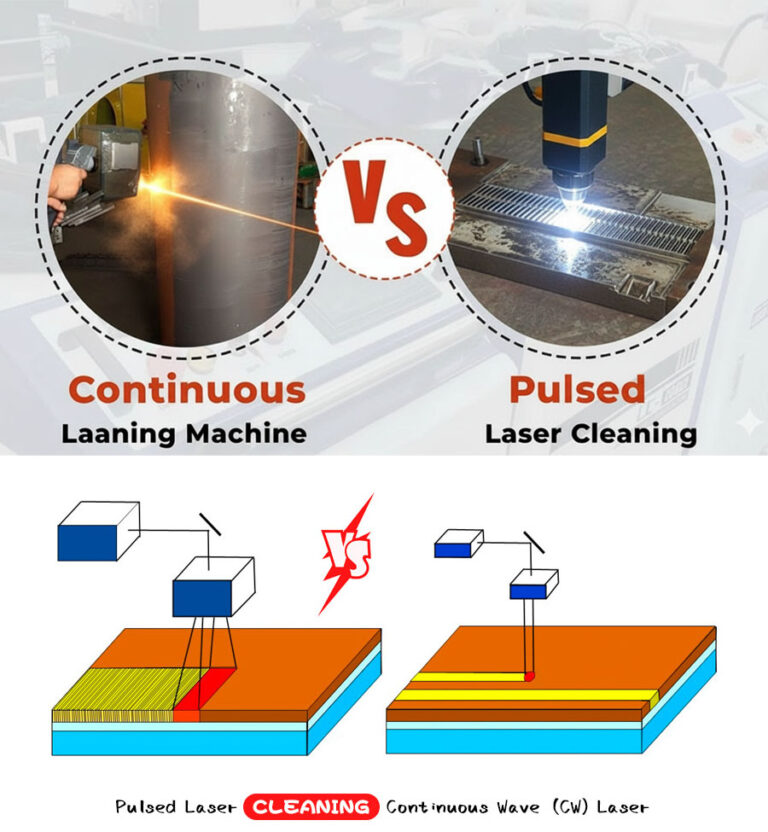
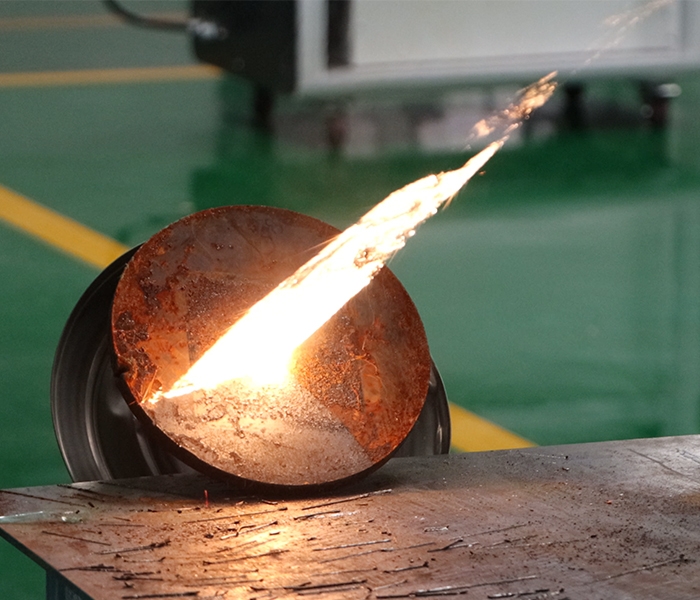
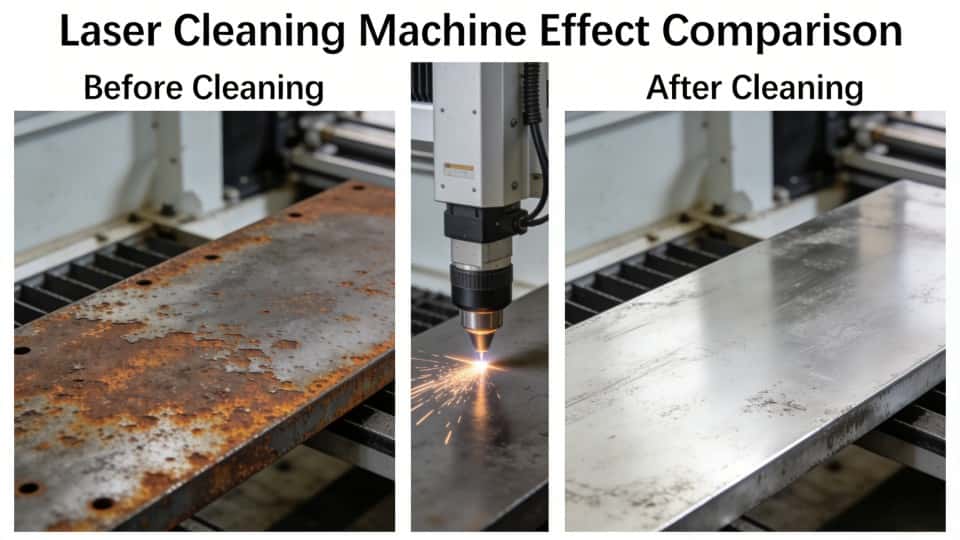
Pulse fiber lasers emit short, high-energy pulses that are preferentially absorbed by rust layers. The oxide expands rapidly and detaches from the substrate without mechanical contact.
Typical Laser Rust Removal Parameters
| Laser Power | Application Scope | Cleaning Width |
|---|---|---|
| 100W | Light rust | 10–80 mm |
| 300W | Medium corrosion | 10–120 mm |
| 1000W | Heavy industrial rust | 20–150 mm |
| 2000W | Thick scale removal | 50–200 mm |
Advantages of Laser Cleaning
- No consumables
- Minimal substrate damage
- Precise control
- Low environmental impact
- Reduced maintenance
Limitations
- Higher initial equipment cost
- Requires operator training
- Slower for extremely large open surfaces compared to blasting
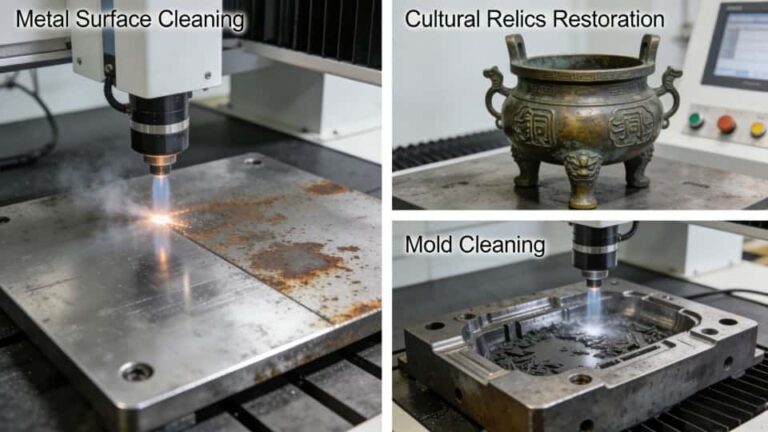
Laser cleaning is increasingly preferred in aerospace, automotive restoration, mold cleaning, and heritage conservation.
Chemical Rust Removal
Chemical removal involves acids or chelating agents to dissolve iron oxides.
Common Chemicals
| Chemical | Application | Risk Level |
|---|---|---|
| Phosphoric Acid | Light rust | Moderate |
| Hydrochloric Acid | Heavy rust | High |
| Rust Converters | Stabilization | Low–Moderate |
Advantages
- Effective for complex geometries
- Penetrates deep pitting
Disadvantages
- Hazardous waste disposal
- Chemical handling risks
- Potential hydrogen embrittlement
Professionals must follow environmental compliance regulations when using chemical methods.
Mechanical Grinding and Wire Brushing
Used primarily for localized repair work.
Tools Used
- Angle grinders
- Wire brushes
- Needle scalers
- Flap discs
Advantages
- Low cost
- Suitable for spot treatment
Disadvantages
- Labor-intensive
- Surface damage risk
- Inconsistent finish
Mechanical methods are often used as preliminary steps.
High-Pressure Water Jetting
Ultra-high-pressure water jetting (UHP) uses pressures up to 40,000 PSI.
Benefits
- No abrasive waste
- Effective for coating removal
- Suitable for marine structures
Limitations
- Equipment cost
- Water containment requirements
Electrolytic Rust Removal
Electrolysis uses electrical current in an electrolyte solution to reverse oxidation.
Application Scope
- Antique restoration
- Precision parts
- Tools
Not practical for large industrial surfaces.
Professional Selection Matrix
| Criteria | Blasting | Laser | Chemical | Water Jet |
|---|---|---|---|---|
| Large Area | Excellent | Good | Fair | Good |
| Precision Parts | Poor | Excellent | Good | Fair |
| Environmental Compliance | Moderate | High | Low | High |
| Consumables Cost | High | Low | Medium | Low |
| Surface Damage Risk | Moderate–High | Low | Moderate | Low |
Professionals evaluate all these variables before choosing a method.
Surface Preparation After Rust Removal
Professional rust removal does not stop at cleaning. Surface preparation includes:
- Surface roughness measurement (Ra value)
- Adhesion testing
- Degreasing
- Primer application
Coating adhesion often depends on correct surface profile.
Economic Analysis of Professional Rust Removal
Long-Term Cost Comparison
| Method | Initial Cost | Operating Cost | Environmental Fees | Total Lifecycle Cost |
|---|---|---|---|---|
| Blasting | Medium | High | High | High |
| Laser | High | Low | Low | Medium–Low |
| Chemical | Low | Medium | High | Medium–High |
Laser cleaning often provides superior lifecycle ROI.
Industry-Specific Professional Practices
Shipbuilding
- UHP water jetting
- Abrasive blasting
- Laser cleaning for precision weld areas
Automotive Restoration
- Laser cleaning
- Media blasting for frames
Aerospace
- Laser cleaning only
- Strict metallurgical preservation
Heavy Machinery
- Combination of blasting and laser cleaning
Safety Protocols in Professional Rust Removal
Regardless of method:
- PPE is mandatory
- Ventilation systems required
- Fire safety equipment available
- Waste management plan implemented
Laser systems additionally require:
- OD-rated protective eyewear
- Controlled beam zone
- Interlock systems
Why Laser Cleaning Is Increasingly Preferred
Laser cleaning eliminates:
- Abrasive media cost
- Chemical disposal
- Excessive surface erosion
- Dust contamination
It provides:
- Micron-level precision
- Controlled heat input
- Environmentally friendly operation
Modern professionals increasingly choose laser rust removal for sustainable operations.
Professional rust removal is not about scraping away visible oxidation—it is a controlled industrial process guided by material science, environmental compliance, surface preparation standards, and long-term cost considerations. Depending on corrosion severity and application requirements, professionals may use abrasive blasting, laser cleaning, chemical treatment, water jetting, or mechanical methods. However, laser rust removal is rapidly becoming the preferred solution for industries that demand precision, environmental responsibility, and minimal substrate damage. The most effective professional strategy is always method selection based on objective technical evaluation—not tradition.
Let’s Upgrade Your Rust Removal Process – BOGONG Machinery
If you are evaluating professional rust removal solutions for your workshop, shipyard, restoration business, or industrial plant, we are ready to support you.
BOGONG Machinery provides:
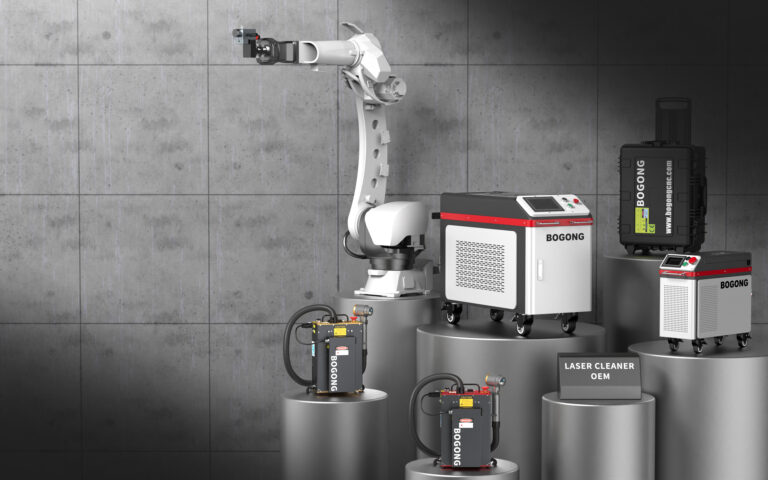
• Industrial pulse fiber laser rust removal systems (100W–2000W)
• Complete technical training programs
• Parameter optimization guidance
• ROI analysis support
• Factory-direct pricing
• After-sales engineering service
We don’t just supply equipment—we help you implement a professional rust removal strategy that improves efficiency, reduces cost, and protects your substrate.
Contact BOGONG Machinery today and let’s build a smarter, cleaner, and more profitable rust removal process together.
Talk to Bogong Laser Cleaning Machines ExpertsGet a Quote or Customized Solution for Your Application

-
Whatsapp: +86-15665870861
-
Email: info@bogongcnc.com