How to compare laser cleaning machine suppliers effectively?
Choosing a laser cleaning machine supplier is not merely a purchasing decision—it is a strategic capital investment that directly affects productivity, cleaning performance, maintenance costs, operator safety, and long-term return on investment. Many buyers make the mistake of comparing only price and nominal power (e.g., 1000W vs 1500W) without understanding beam quality, pulse energy stability, cooling architecture, optical integration, control systems, and after-sales engineering capabilities. A poorly selected supplier can result in unstable output, inconsistent cleaning quality, overheating failures, safety risks, and expensive downtime.
To compare laser cleaning machine suppliers effectively, you must evaluate five core dimensions: laser source quality and beam stability, system integration engineering, cleaning performance verification, lifecycle cost structure, and after-sales technical support capability. Price alone is not a reliable indicator of performance or long-term value. A structured technical evaluation matrix ensures objective supplier comparison and risk reduction.
Understanding how to compare suppliers rigorously requires an engineering-based procurement framework rather than a superficial quotation comparison. Below is a comprehensive technical guide from the perspective of an industrial laser equipment manufacturer and engineering consultant.
Table of Content
HIDE
Core Technical Evaluation: Laser Source and Beam Quality
The laser source is the heart of the cleaning system. Differences in supplier quality often begin here.
Key Parameters to Evaluate
- Laser type (Pulsed Fiber vs Continuous Wave)
- Pulse energy (mJ)
- Pulse width (ns)
- Beam quality (M² value)
- Wavelength stability
- Energy density control
- Output power stability (±%)
Laser Source Comparison Table
| Parameter | Entry-Level Supplier | Mid-Range Supplier | High-Grade Industrial Supplier |
|---|---|---|---|
| Laser Type | Basic pulsed | Pulsed fiber | Advanced pulsed fiber |
| Pulse Energy | 1–2 mJ | 5–10 mJ | 10–20 mJ |
| Beam Quality (M²) | 1.6–2.0 | 1.4–1.6 | <1.3 |
| Power Stability | ±5% | ±3% | ±1% |
| Cooling System | Air | Hybrid | Industrial water cooling |
Higher pulse energy and stable beam quality allow faster cleaning with reduced substrate risk.
System Integration Engineering Capability
Many suppliers assemble components rather than engineer systems. The difference lies in:
- Optical alignment precision
- Galvo scanning head quality
- Control software integration
- Safety enclosure compliance
- Thermal management design
- Electrical shielding
Integration Quality Checklist
| Component | Questions to Ask Supplier |
|---|---|
| Galvo Scanner | What is the maximum scanning speed? Brand used? |
| Optical Lens | Anti-reflective coating quality? |
| Control Software | Customizable parameters? Data logging? |
| Cooling Unit | Continuous operation rating? |
| Safety | CE certification? Interlock systems? |
A strong supplier demonstrates system-level engineering, not just component assembly.
Performance Validation and Application Testing
Suppliers must provide verifiable performance data.
Required Validation Evidence
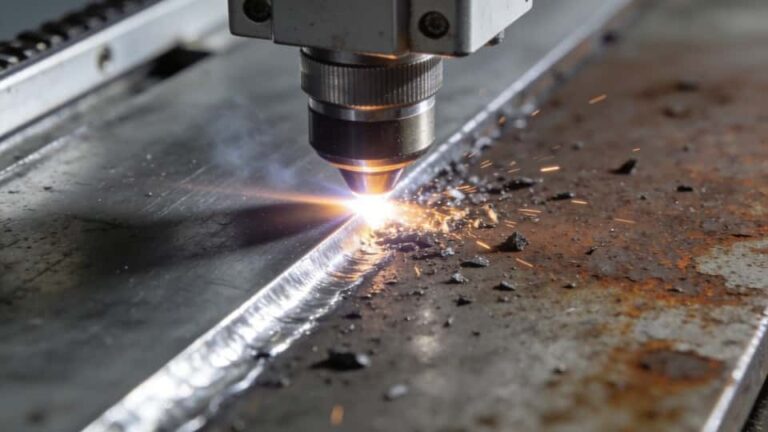
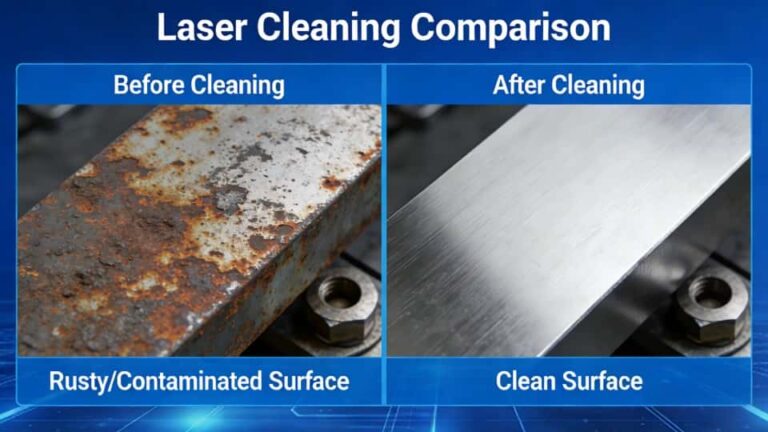
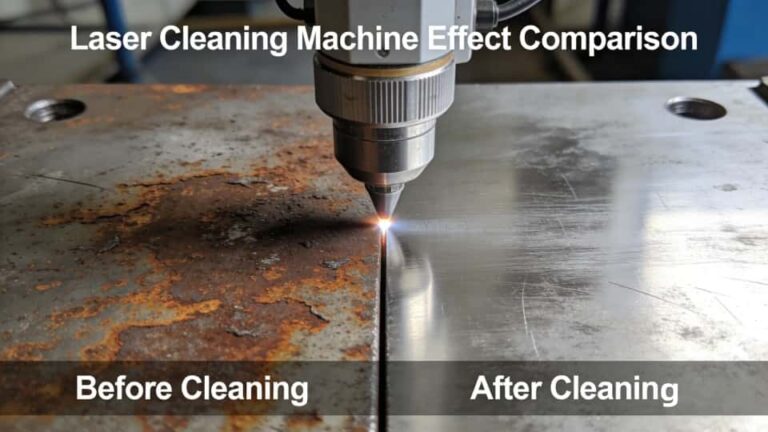
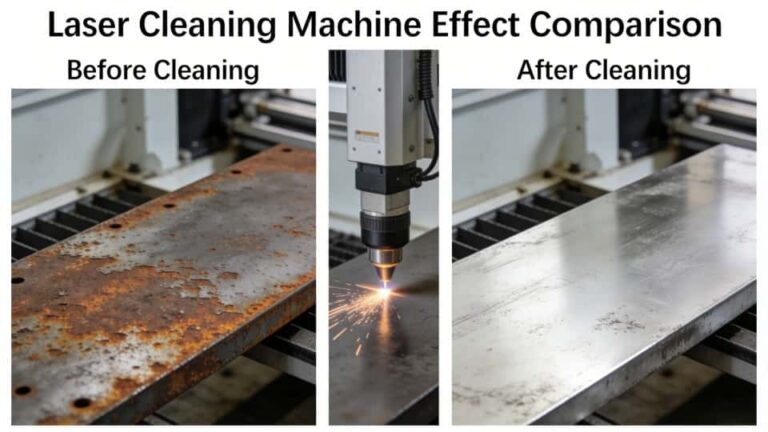
- Before/after cleaning images
- Surface roughness measurements (Ra values)
- Cleaning speed metrics (cm²/min)
- Substrate damage testing reports
- Adhesion test results after cleaning
Performance Benchmark Table
| Test Condition | Expected Industrial Standard |
|---|---|
| Rust Removal Speed | 1–3 m²/hour (1000W pulsed) |
| Surface Roughness Control | Adjustable 1.0–3.5 µm |
| Substrate Damage | None under correct settings |
| Continuous Operation | ≥8 hours stable |
Suppliers unwilling to provide real testing data should be approached cautiously.
Lifecycle Cost Analysis (Total Cost of Ownership)
Capital cost is only part of the equation.
Cost Components to Evaluate
- Initial equipment cost
- Laser source lifespan (100,000+ hours typical for quality fiber lasers)
- Maintenance interval
- Spare part availability
- Consumables (minimal in laser systems)
- Downtime cost
5-Year Cost Comparison Example
| Cost Factor | Low-Cost Supplier | Industrial Supplier |
|---|---|---|
| Purchase Price | $25,000 | $45,000 |
| Maintenance | $10,000 | $3,000 |
| Downtime Risk | High | Low |
| Total 5-Year Cost | $45,000+ | $48,000 |
Although initial cost is higher, reliability reduces long-term operational risk.
After-Sales Technical Support and Engineering Depth
Effective supplier comparison must include service capability.
Evaluate:
- Remote diagnostics capability
- Response time
- Spare parts warehouse location
- On-site training availability
- Technical documentation depth
Support Capability Matrix
| Support Feature | Basic Supplier | Advanced Supplier |
|---|---|---|
| Online Support | Limited | 24/7 |
| Spare Parts | On request | Stocked inventory |
| Training | Manual only | Structured program |
| Engineering Customization | None | Yes |
After-sales support often determines long-term satisfaction.
Certification and Compliance
Industrial buyers must confirm:
- CE Certification
- ISO manufacturing standards
- Electrical safety compliance
- Laser safety classification (Class 4 compliance)
- Environmental standards
Ask for authentic documentation.
Automation and Future Scalability
Suppliers should offer:
- Robot integration options
- CNC compatibility
- API integration
- Industry 4.0 readiness
- Custom scanning patterns
Future scalability determines ROI in smart manufacturing environments.
Supplier Stability and Manufacturing Capability
Assess:
- Factory size
- Engineering team
- R&D investment
- Export experience
- Industry reputation
Long-term supplier viability is critical for parts availability and warranty fulfillment.
Risk Assessment Framework
A structured evaluation scoring model improves objectivity.
Supplier Evaluation Scorecard
| Evaluation Category | Weight (%) | Supplier A | Supplier B |
|---|---|---|---|
| Laser Quality | 25 | 18 | 23 |
| System Engineering | 20 | 15 | 19 |
| Performance Proof | 15 | 10 | 14 |
| Lifecycle Cost | 15 | 12 | 13 |
| After-Sales | 15 | 8 | 14 |
| Certification | 10 | 6 | 9 |
| Total Score | 100 | 69 | 92 |
Using quantitative scoring prevents emotional purchasing decisions.
Common Procurement Mistakes
- Comparing only wattage
- Ignoring pulse energy specifications
- Underestimating cooling requirements
- Overlooking safety compliance
- Choosing lowest price without lifecycle analysis
Industrial laser cleaning is a precision technology, not a commodity tool.
Field Application Comparison Example
In automotive restoration:
- Low-grade suppliers show inconsistent beam distribution
- Industrial suppliers provide uniform cleaning and reduced operator fatigue
In shipbuilding:
- High-pulse industrial systems outperform entry-level machines in thick corrosion removal
Technical Interview Questions for Suppliers
- What is your laser source brand and lifetime specification?
- Provide M² beam quality data.
- Show independent surface testing results.
- What is your cooling system rated duty cycle?
- How do you prevent thermal accumulation?
- Provide reference client cases in similar industry.
Serious suppliers respond with measurable data.
Final Technical Conclusion
To compare laser cleaning machine suppliers effectively, focus on:
- Laser source quality
- Beam stability and pulse energy
- Integration engineering
- Performance validation
- Lifecycle cost
- After-sales support
- Certification compliance
- Long-term supplier reliability
Avoid superficial price-based decisions. Structured technical evaluation ensures reliable performance, safe operation, and sustainable ROI.
Industrial laser cleaning systems vary dramatically in quality despite similar external appearance. Only through disciplined technical comparison can buyers secure a high-performance solution aligned with operational requirements.
Let’s Make Your Evaluation Easier
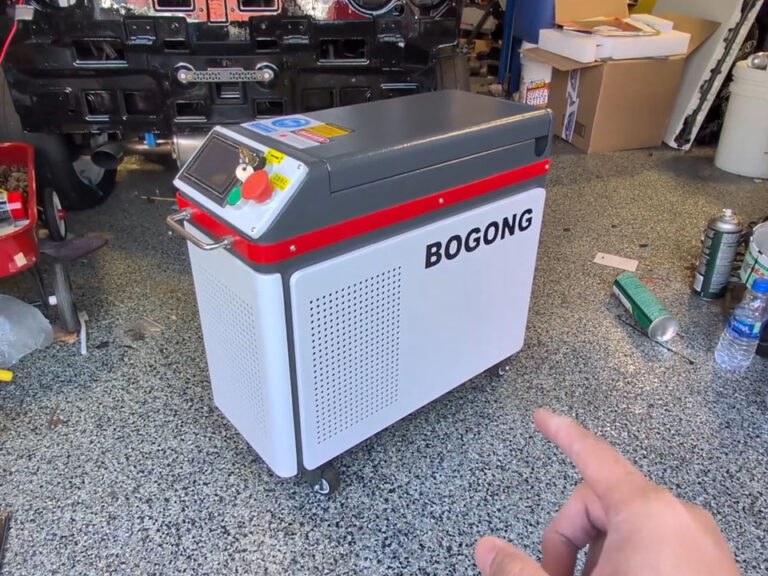
At BOGONG Machinery, we encourage buyers to evaluate us rigorously. We provide full technical data, real performance testing, engineering consultation, and long-term support tailored to your application. If you are comparing suppliers and need transparent specifications, live testing videos, or application-specific recommendations, our engineering team is ready to assist.
Contact BOGONG Machinery to discuss your cleaning requirements and experience a supplier that prioritizes engineering integrity over marketing claims.
Talk to Bogong Laser Cleaning Machines ExpertsGet a Quote or Customized Solution for Your Application

-
Whatsapp: +86-15665870861
-
Email: info@bogongcnc.com