What compliance standards apply to industrial laser cleaning machines?
Industrial laser cleaning machines are powerful Class 4 laser systems capable of delivering high-energy optical radiation. While they provide precision surface treatment and environmental advantages over sandblasting and chemical stripping, they also introduce significant safety, electrical, electromagnetic, and occupational health considerations. Many buyers focus on output power and cleaning speed but overlook regulatory compliance—an oversight that can lead to customs delays, rejected installations, workplace safety violations, insurance issues, or even legal liability. Compliance is not optional; it is a core requirement for industrial deployment.
Industrial laser cleaning machines must comply with multiple regulatory frameworks, including laser safety standards (such as IEC 60825-1), electrical safety directives (such as IEC 60204-1), electromagnetic compatibility standards (EMC), machinery safety directives, and occupational health regulations. In the European Union, CE marking is mandatory. In the United States, FDA/CDRH laser regulations and OSHA workplace safety requirements apply. Additional standards may govern electrical systems, environmental emissions, and industrial machinery integration.
Understanding compliance requires analyzing international laser classification systems, electrical safety codes, mechanical directives, emission controls, and industry-specific certifications.
Table of Content
HIDE
Laser Safety Standards (Core Regulatory Framework)
Laser cleaning machines are typically classified as Class 4 laser systems, the highest hazard category.
International Standard: IEC 60825-1
IEC 60825-1 defines:
- Laser classification (Class 1–4)
- Accessible emission limits
- Labeling requirements
- User information requirements
- Protective housing specifications
Laser Class Definitions (Simplified)
| Class | Risk Level | Industrial Cleaning Relevance |
|---|---|---|
| Class 1 | Safe under normal use | Fully enclosed systems |
| Class 2 | Visible low-power | Not applicable |
| Class 3 | Moderate hazard | Rare |
| Class 4 | High hazard | Most laser cleaners |
Most handheld and open laser cleaning systems fall under Class 4 and require strict safety measures.
European Union Compliance (CE Marking)
In the EU, laser cleaning machines must carry CE marking. This requires compliance with multiple directives:
1. Machinery Directive (2006/42/EC)
Ensures:
- Mechanical safety
- Risk assessment documentation
- Emergency stop systems
- Operator protection measures
2. Low Voltage Directive (LVD)
Covers:
- Electrical safety
- Insulation standards
- Protection against shock
3. EMC Directive
Ensures:
- Electromagnetic compatibility
- Immunity to interference
- Controlled emissions
4. RoHS Directive
Restricts hazardous substances in electrical components.
CE Compliance Matrix
| Directive | Scope |
|---|---|
| Machinery Directive | Mechanical safety |
| LVD | Electrical safety |
| EMC | Electromagnetic emissions |
| RoHS | Environmental compliance |
CE marking requires technical documentation and conformity assessment.
United States Compliance Requirements
In the U.S., laser systems must comply with federal and workplace regulations.
FDA/CDRH Regulations (21 CFR 1040)
The U.S. Food and Drug Administration regulates laser products.
Manufacturers must:
- Submit product reports
- Classify laser hazard level
- Provide safety labeling
- Implement emission controls
OSHA (Occupational Safety and Health Administration)
OSHA enforces workplace safety standards including:
- Laser hazard training
- Protective eyewear requirements
- Controlled access areas
- Ventilation requirements
ANSI Z136 Series
The ANSI Z136 standards provide guidance for safe laser use in industrial environments.
Electrical Safety Standards
Industrial laser cleaning machines contain high-voltage components.
IEC 60204-1
This standard governs electrical equipment of industrial machines.
It covers:
- Wiring safety
- Overcurrent protection
- Grounding systems
- Control panel design
- Emergency stops
Electrical compliance ensures safe integration into factory infrastructure.
Electromagnetic Compatibility (EMC)
Laser cleaning machines use high-frequency electronics.
EMC standards ensure:
- No interference with nearby equipment
- Stable operation in industrial environments
- Compliance with emission limits
Common EMC standards:
- EN 61000 series (EU)
- FCC Part 15 (USA)
Failure to meet EMC can disrupt production lines.
Environmental and Emission Standards
Laser cleaning produces:
- Metal oxide dust
- Organic fumes (paint removal)
- Particulate emissions
Compliance may require:
- Local exhaust ventilation systems
- HEPA filtration
- Activated carbon filters
In some regions, workplace air quality regulations apply.
Mechanical and Structural Safety
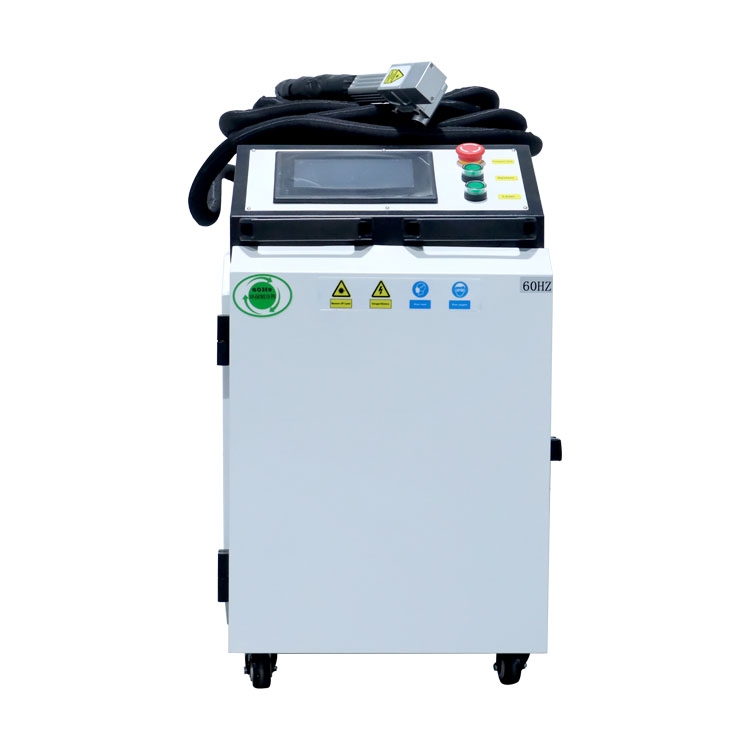
Industrial laser cleaning machines must include:
- Protective housing
- Interlock systems
- Emergency stop buttons
- Key-switch control
- Laser warning labels
Risk assessment documentation is typically required for CE marking.
Documentation and Certification Requirements
Manufacturers must provide:
- Declaration of Conformity
- User manual with safety instructions
- Risk assessment report
- Electrical schematics
- Laser classification report
Buyers should verify documentation authenticity.
Workplace Implementation Requirements
Beyond machine compliance, facilities must ensure:
- Controlled laser zones
- Protective eyewear (specific wavelength rating)
- Operator training
- Warning signage
- Regular inspection procedures
Compliance is shared responsibility between manufacturer and operator.
Industry-Specific Compliance
Certain sectors require additional certifications:
Aerospace
- NADCAP process compliance
- Material integrity documentation
Automotive
- ISO 9001 manufacturing certification
- IATF 16949 quality system
Nuclear or Energy
- Radiation safety compatibility
- Environmental monitoring
Global Compliance Overview Table
| Region | Key Standard |
|---|---|
| EU | CE (Machinery, LVD, EMC) |
| USA | FDA/CDRH + OSHA |
| China | GB Laser Safety Standards |
| International | IEC 60825-1 |
Understanding export destination requirements is critical for global suppliers.
Common Compliance Risks
- Missing CE marking
- No FDA product report (USA)
- Incomplete risk assessment
- Lack of proper labeling
- Non-certified electrical components
Such deficiencies can result in shipment rejection or operational shutdown.
How to Verify Compliance from Suppliers
Ask for:
- CE certificate and Declaration of Conformity
- Laser classification report
- EMC test report
- Electrical safety certificate
- Risk assessment documentation
- User manual with safety instructions
Authentic suppliers provide verifiable documentation.
Integration Compliance for Automated Systems
If laser cleaning machines are integrated into robotic production lines, additional standards apply:
- ISO 10218 (robot safety)
- Functional safety systems (ISO 13849)
- Machine guarding compliance
Integrated systems must meet higher safety requirements.
Final Technical Conclusion
Industrial laser cleaning machines must comply with multiple international standards covering laser radiation safety, electrical safety, electromagnetic compatibility, mechanical integrity, and workplace health regulations. The most critical standards include IEC 60825-1 for laser classification, CE directives in the European Union, FDA/CDRH regulations in the United States, and OSHA workplace safety requirements.
Compliance ensures safe operation, legal market access, insurance eligibility, and long-term reliability. Buyers should never evaluate laser cleaning equipment solely on price or performance—regulatory certification is equally important.
Let’s Ensure Your System Meets Every Requirement
At BOGONG Machinery, we manufacture industrial laser cleaning systems designed to comply with international safety and regulatory standards. Our equipment includes full documentation, CE conformity, safety labeling, and engineered protection systems suitable for global deployment.
If you need detailed compliance documentation or assistance navigating regulatory requirements for your region, contact BOGONG Machinery. We’ll ensure your laser cleaning investment meets both performance and regulatory expectations.
Talk to Bogong Laser Cleaning Machines ExpertsGet a Quote or Customized Solution for Your Application

-
Whatsapp: +86-15665870861
-
Email: info@bogongcnc.com