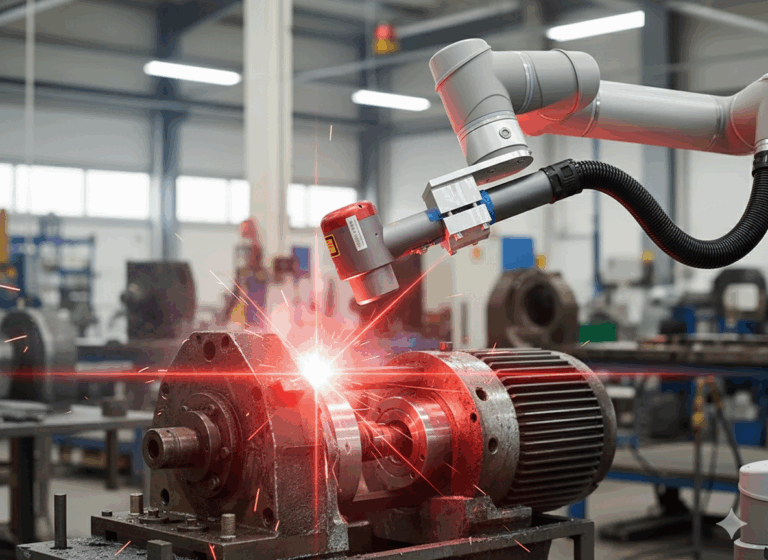
Is There a Market for Laser Cleaning?
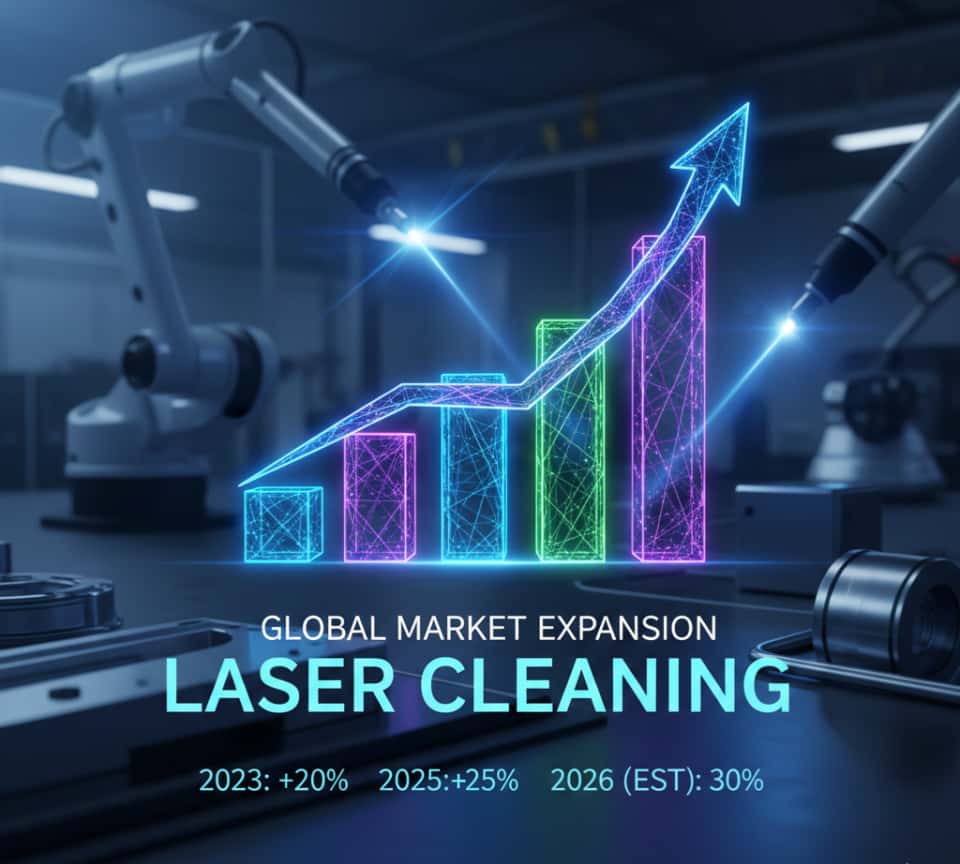
Laser cleaning has moved rapidly from a niche laboratory technique into mainstream industrial discussion. Yet many decision-makers—manufacturers, contractors, distributors, and investors alike—still ask the same fundamental question: is there really a market for laser cleaning, or is it just a temporary technology trend? The uncertainty is understandable. Laser cleaning machines carry a higher upfront cost than traditional abrasive or chemical methods, and early adopters were often limited to high-end industries. Without a clear understanding of demand drivers, application breadth, and long-term economics, it is easy to underestimate—or misjudge—the true size and durability of the market.
The reality is that there is a strong, expanding global market for laser cleaning, driven by environmental regulation, labor cost pressure, automation trends, and the need for precise, non-damaging surface preparation across multiple industries. This market is not speculative; it is already active, diversified, and moving steadily from early adoption toward standardized industrial deployment.
Table of Content
HIDE
Understanding Why Laser Cleaning Exists as a Market at All
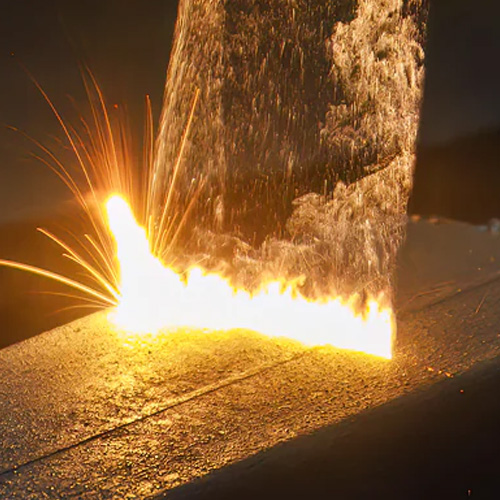
Every industrial cleaning technology survives for one reason only: it solves problems that other methods cannot solve efficiently, safely, or economically. Laser cleaning did not emerge to replace sandblasting or chemical cleaning everywhere. It emerged to address specific pain points that traditional methods increasingly struggle to handle.
Traditional surface cleaning methods share common limitations:
- Abrasive blasting damages substrates and generates secondary waste
- Chemical cleaning creates disposal, safety, and regulatory burdens
- Manual mechanical cleaning is labor-intensive and inconsistent
Laser cleaning, by contrast, offers:
- Non-contact, non-abrasive material removal
- Minimal consumables and waste
- High process control and repeatability
- Compatibility with automation
As industrial environments become more regulated and more automated, these characteristics move from “nice to have” to strategic necessity.
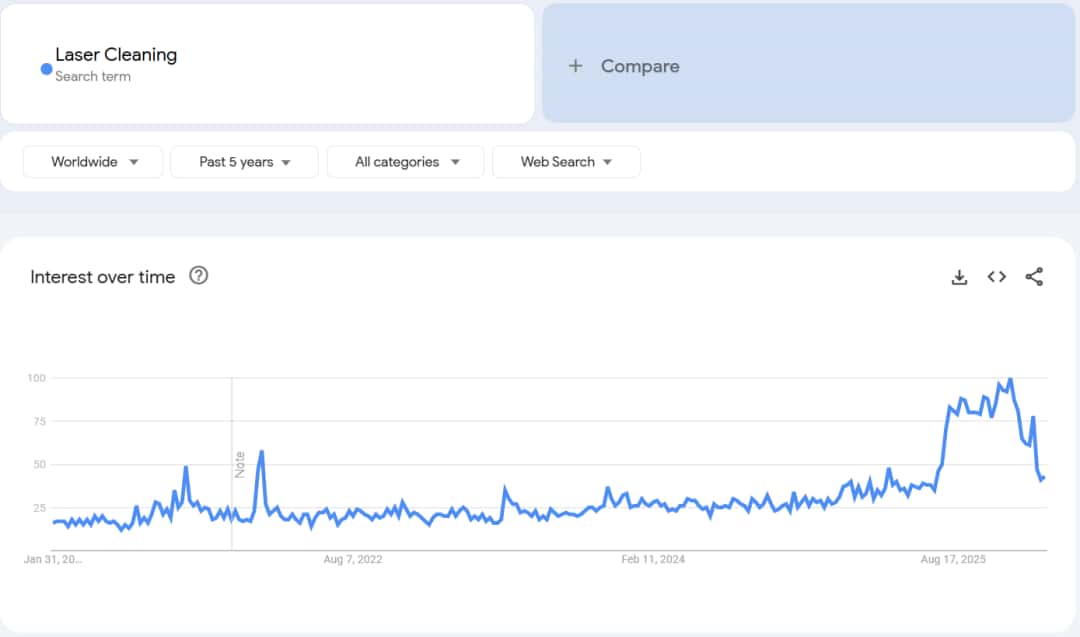
Core Demand Drivers Behind the Laser Cleaning Market
The growth of the laser cleaning market is not driven by a single industry or region. It is powered by structural changes occurring across global manufacturing and maintenance ecosystems.
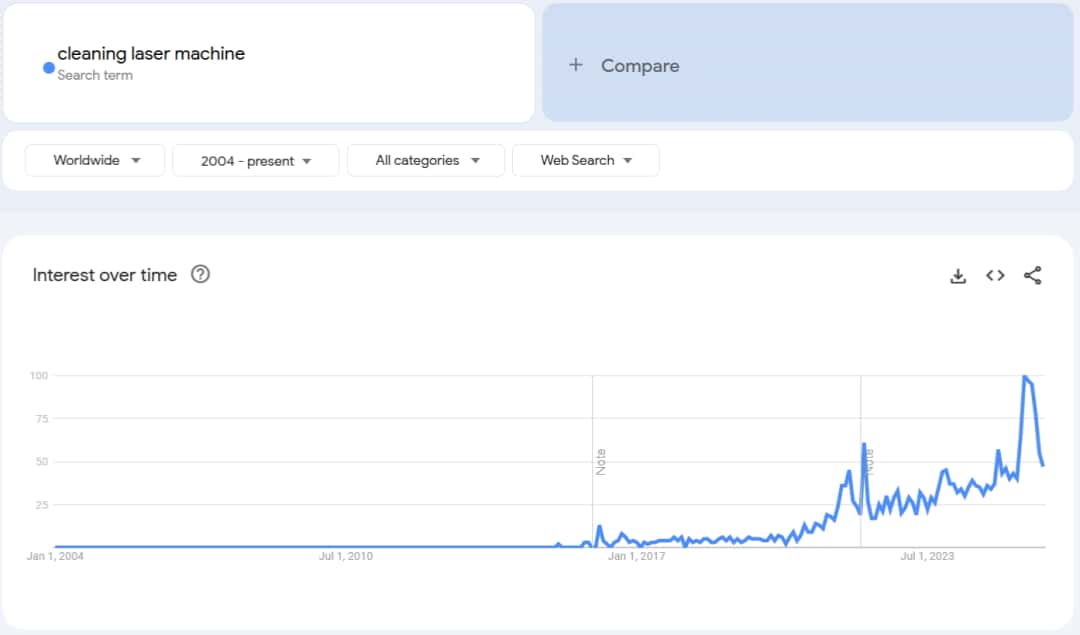
Environmental and Regulatory Pressure
Environmental compliance is one of the strongest long-term drivers. Regulations restricting:
- Chemical solvents
- Dust emissions
- Wastewater discharge
- Worker exposure to hazardous materials
are tightening worldwide. Laser cleaning inherently produces less secondary pollution, making compliance easier and more predictable.
Labor Cost and Workforce Constraints
In many industrial regions:
- Skilled manual labor is becoming scarce
- Safety training costs are rising
- Consistency is harder to maintain across shifts
Laser cleaning reduces reliance on highly skilled manual operators and improves process consistency, especially when integrated with automated systems.
Precision and Surface Integrity Requirements
Industries such as aerospace, automotive, electronics, and mold manufacturing increasingly demand:
- Controlled surface roughness
- Zero substrate damage
- Repeatable adhesion preparation
Laser cleaning uniquely meets these requirements without introducing foreign media.
Market Segmentation by Application Type
Laser cleaning demand does not form a single homogeneous market. It divides naturally by application category, each with different buying behavior and growth characteristics.
Primary Application Segments
| Application Category | Typical Use Cases | Market Maturity |
|---|---|---|
| Rust & oxide removal | Structural steel, maintenance | High |
| Paint & coating removal | Automotive, aerospace | High |
| Welding pre/post treatment | Manufacturing lines | Growing |
| Mold & tool cleaning | Injection, die casting | High |
| Surface activation | Adhesion, bonding | Growing |
| Heritage restoration | Stone, metal artifacts | Niche but stable |
Rust removal and paint stripping remain the largest volume drivers, but higher-margin segments such as mold cleaning and precision surface preparation are growing faster.
Industry-Level Demand Analysis
Manufacturing & Fabrication
Manufacturers adopt laser cleaning to:
- Improve welding quality
- Reduce rework
- Minimize downtime
Laser cleaning fits naturally into lean manufacturing philosophies, especially where quality control is critical.
Automotive & Transportation
In automotive plants and maintenance operations, laser cleaning is used for:
- Weld seam preparation
- Paint removal without damaging base metal
- Component refurbishment
The automotive sector values repeatability and automation compatibility, both of which favor laser-based solutions.
Aerospace & Defense
Aerospace adoption is driven by:
- Strict surface integrity requirements
- Prohibition of aggressive abrasives
- Traceability and process validation
Although volumes are lower, value per machine is high, making this a strategically important segment.
Shipbuilding & Heavy Industry
Shipyards face some of the harshest environments:
- Thick corrosion layers
- Environmental compliance pressure
- Large surface areas
High-power laser cleaning systems are increasingly evaluated as alternatives to sandblasting, particularly where environmental restrictions are tight.
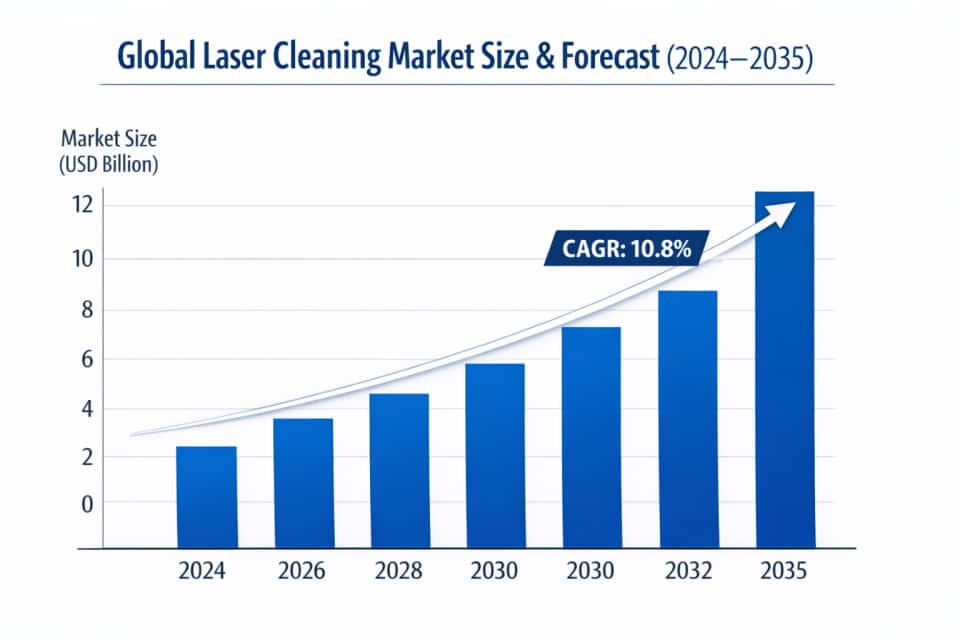
Market Size Perspective and Growth Direction
While precise global market figures vary by source, several trends are consistent across analyses:
- Annual market growth remains in the double-digit range
- Asia-Pacific, Europe, and North America are the largest demand centers
- Adoption is shifting from pilot projects to standard equipment budgets
Relative Growth by Region (Qualitative)
| Region | Growth Momentum | Key Drivers |
|---|---|---|
| Asia-Pacific | Very strong | Manufacturing scale, automation |
| Europe | Strong | Environmental regulation |
| North America | Strong | Labor cost, safety |
| Middle East | Emerging | Infrastructure maintenance |
| Latin America | Gradual | Industrial modernization |
The most important signal is not headline market size, but buyer behavior: laser cleaning is increasingly specified in tenders and internal standards rather than treated as an experimental option.
Cost Versus Value: Why the Market Continues to Expand
The laser cleaning market does not grow because machines are cheap. It grows because total cost of ownership trends favor laser-based solutions over time.
Comparative Cost Structure (Simplified)
| Cost Element | Laser Cleaning | Abrasive Blasting | Chemical Cleaning |
|---|---|---|---|
| Equipment | High upfront | Low–medium | Low |
| Consumables | Very low | High | High |
| Labor | Low | High | High |
| Waste disposal | Minimal | High | Very high |
| Compliance cost | Low | Medium | High |
As regulations tighten and labor costs rise, the economic balance shifts further toward laser cleaning, reinforcing long-term demand.
How Buyers Actually Decide to Enter the Laser Cleaning Market
Understanding whether there is a market for laser cleaning requires looking beyond technology and into buyer decision logic. In practice, companies do not adopt laser cleaning because it is novel or advanced; they adopt it when traditional methods begin to fail economically, operationally, or regulatorily.
Across industries, purchasing decisions typically follow a similar progression. Companies start by tolerating inefficiencies—manual grinding, sandblasting, chemical stripping—until costs, safety risks, or compliance pressures reach a threshold. Laser cleaning is then evaluated not as a replacement for all existing methods, but as a targeted solution for the most problematic processes.
Common Triggers That Lead to Laser Cleaning Adoption
| Trigger Type | Practical Business Impact |
|---|---|
| Environmental regulation | Fines, permit delays, shutdown risk |
| Rising labor cost | Reduced margins, skill shortages |
| Quality inconsistency | Rework, scrap, warranty claims |
| Substrate damage | Shortened component life |
| Automation goals | Labor reduction, throughput increase |
Once one or two of these triggers become critical, the conversation shifts from “Is laser cleaning expensive?” to “Why are we still using outdated methods?”
Purchasing Models: How the Market Actually Buys Laser Cleaning Machines
The laser cleaning market is not driven by impulse purchases. It is dominated by rational, ROI-driven buying behavior, which makes it more stable than many emerging technologies.
Typical Purchasing Models
| Buyer Type | Purchase Motivation | Buying Behavior |
|---|---|---|
| Manufacturers | Process improvement | Engineering-led evaluation |
| Maintenance contractors | Service efficiency | ROI and portability focused |
| OEMs | Quality & consistency | Standardization across plants |
| Government & heritage | Non-destructive cleaning | Tender-based procurement |
| Shipyards | Compliance & scale | Long evaluation cycles |
Most buyers begin with a pilot machine, validate results on real workpieces, then expand adoption once value is proven. This creates a layered demand structure: initial entry-level purchases followed by repeat or upgraded systems.
Portable vs Automated Systems: Two Distinct Market Segments
The laser cleaning market divides clearly into mobile/manual systems and fixed or automated systems, each with different growth dynamics.
Market Characteristics by System Type
| System Type | Typical Buyers | Market Role |
|---|---|---|
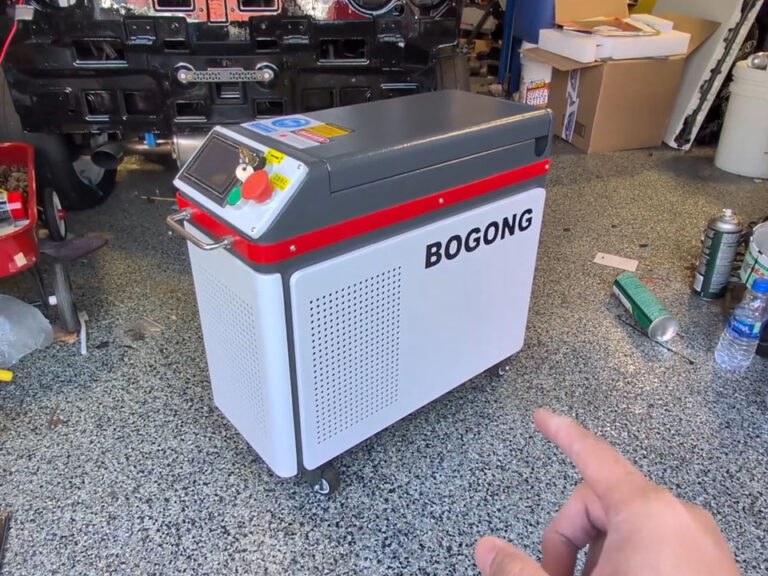
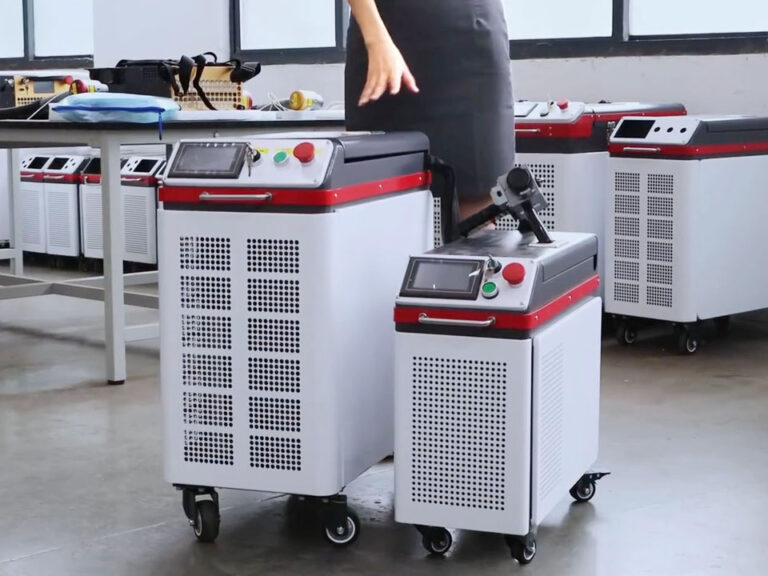
| Handheld / portable | Maintenance, contractors | Entry-level, fast adoption |
| Trolley-mounted | Workshops, factories | Core industrial demand |
| Fixed industrial | OEM lines | Long-term integration |
| Robotic / automated | High-volume plants | High-value, slower growth |
Portable systems dominate unit volume, while automated systems dominate total market value. As automation adoption accelerates globally, the balance is gradually shifting toward higher-power, integrated solutions.
Competitive Landscape: Why the Market Is Still Open
Despite rapid growth, the laser cleaning market is far from saturated. One reason is that the technology sits at the intersection of optics, mechanics, software, and process engineering. This creates natural barriers to entry and limits commoditization.
Supplier Stratification in the Market
| Supplier Tier | Characteristics | Market Position |
|---|---|---|
| Low-end assemblers | Price-driven, minimal support | Short-term buyers |
| Mid-tier manufacturers | Application-focused | Core market |
| High-end system integrators | Custom automation | Premium segment |
Buyers increasingly favor suppliers who can:
- Match machine configuration to application
- Provide process validation
- Offer long-term service and spare support
This shifts competition away from pure price and toward engineering capability, which supports healthier market margins.
Automation and Industry 4.0: A Structural Growth Engine
Laser cleaning aligns naturally with automation trends. Unlike blasting or chemical processes, laser cleaning can be:
- Digitally controlled
- Integrated with vision systems
- Logged and monitored for quality
In Industry 4.0 environments, this matters. Manufacturers want traceable, repeatable surface preparation that can be integrated into digital production lines.
Why Laser Cleaning Fits Automation Better Than Traditional Methods
| Requirement | Traditional Methods | Laser Cleaning |
|---|---|---|
| Process control | Low | High |
| Data integration | Poor | Excellent |
| Automation readiness | Limited | Strong |
| Repeatability | Operator-dependent | Program-driven |
As factories modernize, laser cleaning becomes less of an optional upgrade and more of a process enabler.
Barriers That Still Limit Market Expansion (And Why They Are Shrinking)
No honest market analysis ignores constraints. Laser cleaning adoption is still limited in some sectors by several factors.
Remaining Barriers
| Barrier | Reality |
|---|---|
| High upfront cost | Offset by long-term savings |
| Technical learning curve | Decreasing with better interfaces |
| Misapplication risk | Reduced with better guidance |
| Overpowered solutions | Market education improving |
These barriers are not structural. They diminish as:
- Machine prices gradually decrease
- Suppliers provide better application support
- Users gain experience and confidence
This is why adoption tends to accelerate after initial hesitation.
Long-Term Market Sustainability: Trend or Infrastructure?
A key question investors and distributors ask is whether laser cleaning is a temporary trend or a lasting industrial category.
The strongest indicator is replacement behavior. Once companies adopt laser cleaning successfully, they rarely revert to old methods. Instead, they:
- Expand use cases
- Upgrade power levels
- Integrate automation
This replacement pattern signals infrastructure-level adoption, not experimentation.
Indicators of a Sustainable Market
| Indicator | Market Signal |
|---|---|
| Repeat purchases | Strong |
| Cross-industry adoption | Increasing |
| Integration into standards | Growing |
| OEM specification | Expanding |
Laser cleaning is increasingly written into internal process standards, tender documents, and engineering specifications—clear signs of long-term relevance.
Market Outlook: Where Demand Is Heading
Looking ahead, several trends are likely to shape the market:
- Continued shift from manual to automated systems
- Higher demand for mid- to high-power solutions
- Expansion in maintenance and refurbishment sectors
- Growing role in precision surface preparation
Rather than explosive hype-driven growth, the laser cleaning market shows steady, structural expansion, which is often more valuable for long-term participants.
Final Answer: Is There a Market for Laser Cleaning?
Yes—there is a real, global, and expanding market for laser cleaning. It exists because laser cleaning solves problems that are becoming more severe over time: environmental compliance, labor scarcity, quality control, and automation integration.
The market is not speculative. It is already embedded in manufacturing, maintenance, and restoration workflows across industries. Growth is driven not by novelty, but by necessity.
A Straightforward Industry Perspective
At BOGONG Machinery, we do not approach laser cleaning as a trend to sell into, but as a process solution that must justify itself in real operations. We work with customers to identify where laser cleaning truly adds value—and where it does not—so investments are made for the right reasons.
If you are evaluating whether laser cleaning makes sense for your business or market, the most important step is not buying a machine, but understanding the specific problems you need to solve.
Talk to BOGONG Machinery to explore laser cleaning from a practical, application-driven perspective—grounded in real markets, not marketing claims.
Talk to Bogong Laser Cleaning Machines ExpertsGet a Quote or Customized Solution for Your Application

-
Whatsapp: +86-15665870861
-
Email: info@bogongcnc.com