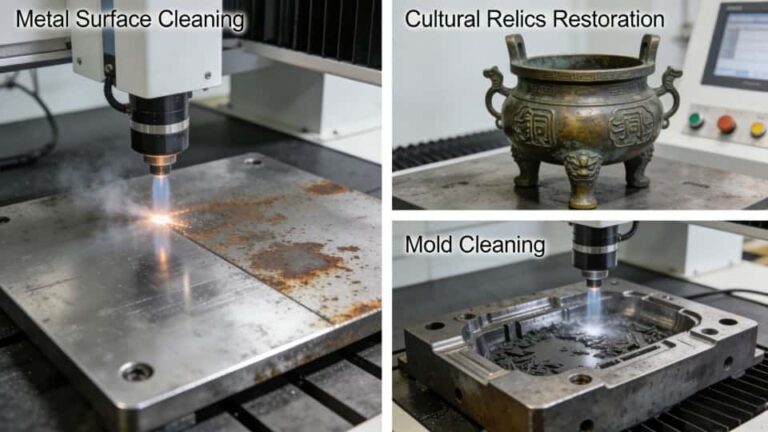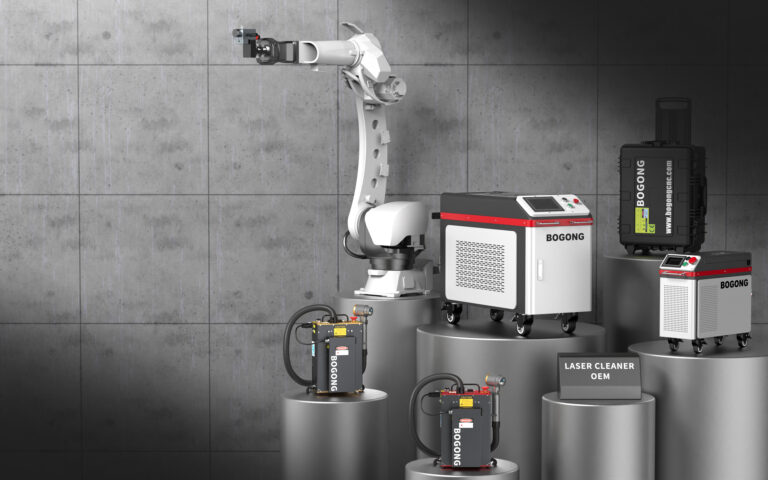
How much do laser cleaning machines cost?
Laser cleaning has moved from a niche surface-treatment technology into a mainstream industrial solution—but one of the first questions buyers ask is also the most confusing: how much does a laser cleaning machine actually cost? The problem is that many buyers compare only the sticker price and later discover hidden costs, mismatched power levels, or performance gaps that directly affect productivity and ROI. Choosing purely by price can lead to underpowered equipment, unreliable components, or costly downtime. The solution is to understand what drives laser cleaning machine pricing, how different configurations change the cost, and how to align investment with real-world applications—this guide is designed to do exactly that.
In practical terms, laser cleaning machines typically cost anywhere from USD 3,000 for low-power desktop units to over USD 300,000 for fully automated, high-power industrial systems, with most professional handheld fiber laser cleaners falling in the USD 8,000–80,000 range depending on power, configuration, and application requirements.
If that range feels too wide to be useful, don’t worry—by the end of this guide, you’ll be able to pinpoint the right price bracket for your specific use case, avoid common purchasing traps, and evaluate laser cleaning machines with an engineer’s mindset rather than a salesperson’s pitch.
Table of Content
HIDE
Step 1: Understanding the Core Cost Structure of Laser Cleaning Machines
To understand pricing, you must first understand what you are paying for. A laser cleaning machine is not a single component but a tightly integrated system. Each subsystem contributes directly to performance, lifespan, and cost.
Major Cost Components Breakdown
| Cost Component | Typical Share of Total Cost | Why It Matters |
|---|---|---|
| Fiber Laser Source | 30–45% | Determines power stability, lifespan, and cleaning efficiency |
| Laser Cleaning Head | 10–20% | Affects beam quality, spot size, and operator control |
| Control System & Software | 5–10% | Influences usability, repeatability, and safety |
| Cooling System | 5–10% | Critical for long-term stability, especially above 500W |
| Electrical & Safety Systems | 5–10% | Compliance, interlocks, emergency stop, CE/UL readiness |
| Mechanical Structure & Housing | 5–10% | Durability, portability, vibration resistance |
| Integration & Testing | 5–15% | Factory calibration, testing, and reliability assurance |
Key insight: Two machines both labeled “1000W laser cleaner” can differ dramatically in price because of laser source brand, optical quality, cooling design, and safety architecture. Power rating alone is never enough to compare cost.
Step 2: Laser Cleaning Machine Price by Power Level (Most Important Factor)
Laser power is the single strongest price driver. Below is a detailed, application-oriented pricing breakdown.
Price Range by Power Category
| Power Range | Typical Price (USD) | Common Applications | Buyer Profile |
|---|---|---|---|
| 50–100W | $3,000–6,000 | Lab testing, electronics, light oxide | R&D, universities |
| 200–300W | $5,000–10,000 | Light rust, paint prep | Maintenance teams |
| 500W | $8,000–18,000 | Mold cleaning, thin coatings | Professional workshops |
| 1000W | $15,000–35,000 | Rust, paint, welding prep | Industrial users |
| 1500–2000W | $30,000–60,000 | Heavy rust, scale removal | Manufacturing plants |
| 3000W+ | $70,000–300,000+ | Automation lines, shipyards | High-volume industry |
Power vs Cleaning Efficiency (Indicative)
| Power | Rust Removal Speed (m²/hr) | Typical Duty Cycle |
|---|---|---|
| 200W | 0.5–1.0 | Intermittent |
| 500W | 1.5–3.0 | Medium |
| 1000W | 3.0–6.0 | Continuous |
| 2000W | 6.0–12.0 | Heavy-duty |
| 3000W+ | 12.0+ | Industrial automation |
Engineering reality: Doubling power does not double price—but it often increases system complexity exponentially due to cooling, optics, and electrical demands.
Step 3: Pulsed vs Continuous Wave (CW) – Why This Changes the Price
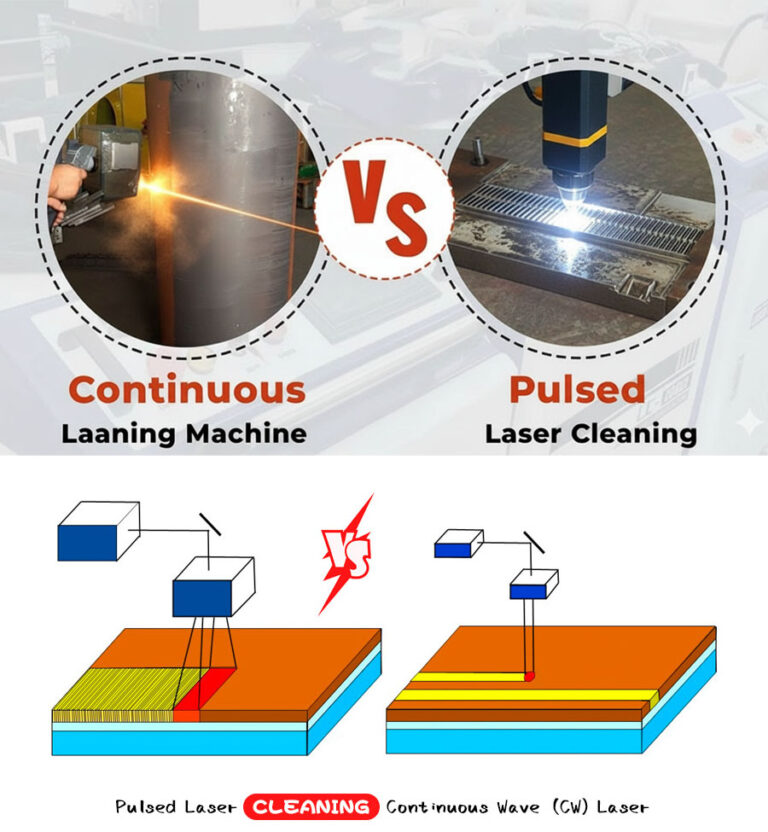
Laser cleaning machines are broadly divided into pulsed fiber lasers and continuous wave (CW) fiber lasers, and this choice has a major impact on cost.
Pulsed vs CW Price Comparison
| Feature | Pulsed Laser Cleaner | CW Laser Cleaner |
|---|---|---|
| Typical Power | 100–500W | 1000–3000W |
| Price Range | $5,000–25,000 | $15,000–100,000+ |
| Cleaning Precision | Very high | Moderate |
| Substrate Damage Risk | Very low | Higher if misused |
| Best For | Precision cleaning | Heavy rust, scale |
| Maintenance Cost | Moderate | Lower |
Why pulsed machines may cost more per watt: Pulsed systems require sophisticated modulation, higher-precision optics, and tighter thermal control—making them more expensive per watt, despite lower nominal power.
Step 4: Configuration & Form Factor – Hidden Cost Multipliers
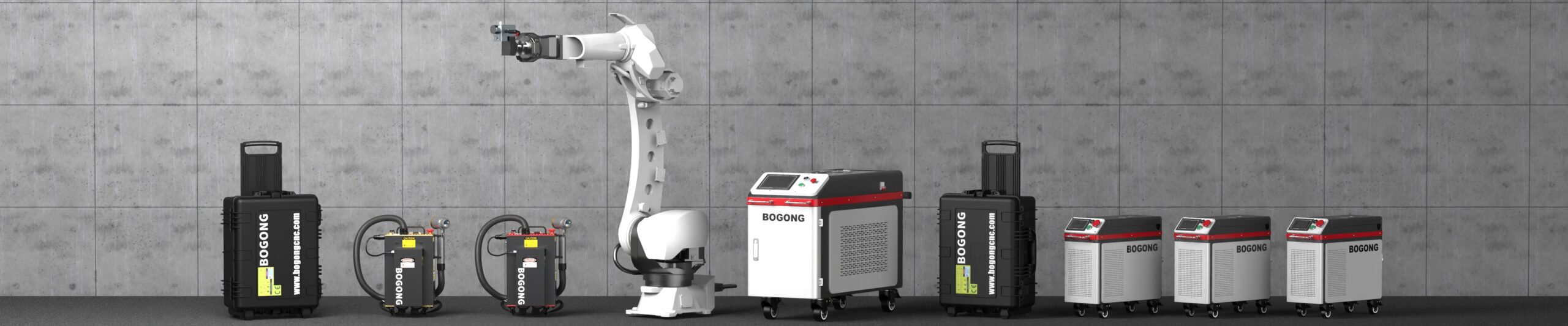
Two machines with identical laser power can vary in price by 30–50% depending on configuration.
Configuration Price Impact Table
| Configuration | Price Impact | Notes |
|---|---|---|
| Handheld Portable | Baseline | Most cost-effective |
| Trolley-Mounted | +10–15% | Better cooling & stability |
| Cabinet-Type Industrial | +20–40% | Long duty cycle |
| Robotic/Automated | +50–200% | PLC, robotics integration |
Optional Features That Increase Cost
| Option | Typical Cost Add-On |
|---|---|
| Dual-axis scanning head | +$2,000–5,000 |
| Fume extraction system | +$1,500–6,000 |
| Vision alignment system | +$3,000–10,000 |
| CE/UL certification | +$1,000–3,000 |
| Custom software | +$2,000–8,000 |
Buyer warning: Some suppliers quote a low base price, then add essential items later. Always confirm fully operational price.
Step 5: Total Cost of Ownership (TCO) – The Price Most Buyers Ignore
The real cost of a laser cleaning machine is not the purchase price—it’s the 10-year ownership cost.
5-Year TCO Comparison (Example)
| Cost Item | Laser Cleaning | Sandblasting | Chemical Cleaning |
|---|---|---|---|
| Equipment | $25,000 | $10,000 | $8,000 |
| Consumables | $0 | $15,000 | $20,000 |
| Labor | $10,000 | $25,000 | $22,000 |
| Waste Disposal | $0 | $12,000 | $18,000 |
| Maintenance | $3,000 | $6,000 | $8,000 |
| Total (5 yrs) | $38,000 | $68,000 | $76,000 |
Conclusion: Laser cleaning is capital-intensive but operationally efficient.
Common Buyer Mistakes That Inflate Cost
| Mistake | Consequence |
|---|---|
| Buying underpowered machine | Low productivity, re-purchase |
| Ignoring duty cycle | Overheating, downtime |
| No local service support | Long repair delays |
| Price-only comparison | Poor beam quality |
Practical Budget Recommendations by Industry
| Industry | Recommended Power | Budget Range |
|---|---|---|
| Automotive repair | 500–1000W | $12,000–30,000 |
| Mold manufacturing | Pulsed 200–500W | $10,000–25,000 |
| Shipbuilding | 2000–3000W | $45,000–120,000 |
| Aerospace | Pulsed precision | $20,000–60,000 |
| Job shops | 1000–1500W | $20,000–45,000 |
Final Thoughts: What Should You Expect to Pay?
Laser cleaning machines are not “cheap tools”—they are productivity assets. Expect to invest:
- $8,000–20,000 for serious professional handheld units
- $25,000–60,000 for heavy industrial applications
- $70,000+ for automated or high-power continuous operation
If the price seems too good to be true, it usually is.
Let’s Talk About Your Real Application
At BOGONG Machinery, we don’t sell “one-price-fits-all” laser cleaners. We help customers match power, pulse type, configuration, and budget to their actual workload—so you don’t overpay, and you don’t underperform.
Whether you need a portable rust remover or a fully integrated industrial system, our engineering team is ready to evaluate your application and provide a clear, honest cost breakdown.
Contact BOGONG Machinery today to get a laser cleaning solution priced for performance, not guesswork.
Talk to Bogong Laser Cleaning Machines ExpertsGet a Quote or Customized Solution for Your Application

-
Whatsapp: +86-15665870861
-
Email: info@bogongcnc.com