What Type of Cleaning Is the Most Profitable?
Cleaning is often treated as a cost center—something that must be done but rarely analyzed as a profit driver. Yet across manufacturing, maintenance, and service industries, cleaning methods directly shape labor costs, throughput, quality outcomes, environmental compliance, and long-term asset value. When viewed through a business lens rather than a technical one, the question is no longer which cleaning method works, but which type of cleaning produces the highest profit over time.
The most profitable cleaning method is not defined by the lowest upfront cost, but by the highest margin between total lifecycle cost and value created—measured in productivity gains, labor savings, reduced downtime, and compliance risk avoidance. When evaluated on these terms, certain cleaning approaches consistently outperform others across multiple industries.
Table of Content
HIDE
How Profitability Should Be Measured in Industrial Cleaning
Before comparing cleaning types, it is essential to define what “profitable” actually means. In industrial environments, profitability rarely comes from charging more for a cleaning service alone. It comes from doing more work with fewer resources, less risk, and higher consistency.
Core Profitability Drivers in Cleaning Operations
| Profit Driver | Why It Matters |
|---|---|
| Labor efficiency | Labor is the largest recurring cost |
| Cleaning speed | Directly affects throughput |
| Downtime reduction | Idle equipment destroys margins |
| Consistency & quality | Reduces rework and scrap |
| Compliance cost | Fines and permits erode profit |
| Consumables | Ongoing hidden expenses |
A cleaning method that appears “cheap” can quickly become unprofitable once labor, consumables, waste disposal, and downtime are fully accounted for.
Traditional Cleaning Methods: Where Profit Is Lost
Many industries still rely on legacy cleaning methods because they are familiar and require minimal upfront investment. However, familiarity does not equal profitability.
Manual Mechanical Cleaning (Grinding, Brushing)
| Aspect | Profit Impact |
|---|---|
| Equipment cost | Low |
| Labor requirement | Very high |
| Consistency | Operator-dependent |
| Throughput | Low |
| Profitability | Poor at scale |
Manual methods rarely scale profitably. Margins shrink as labor costs rise and quality variance increases.
Abrasive Blasting (Sand, Grit, Shot)
| Aspect | Profit Impact |
|---|---|
| Equipment cost | Medium |
| Consumables | High |
| Waste disposal | High |
| Surface damage risk | Significant |
| Profitability | Declining |
Abrasive blasting remains common, but its profitability is increasingly eroded by consumable costs, cleanup time, and environmental compliance burdens.
Chemical Cleaning
| Aspect | Profit Impact |
|---|---|
| Equipment cost | Low |
| Chemical cost | High recurring |
| Safety & compliance | High risk |
| Waste treatment | Very high |
| Profitability | Structurally weak |
Chemical cleaning is often profitable only in the short term. Over time, regulatory pressure and disposal costs significantly reduce margins.
High-Profit Cleaning Categories: Where Margins Are Actually Made
When profitability is evaluated across full operating cycles, several cleaning types consistently outperform traditional methods.
Precision Surface Cleaning
This category includes mold cleaning, tool cleaning, and surface activation for bonding or coating.
| Profit Factor | Impact |
|---|---|
| Downtime reduction | Extremely high |
| Consumables | Minimal |
| Quality consistency | Very high |
| Pricing power | Strong |
Precision cleaning commands premium pricing because it directly affects product quality and production uptime.
Maintenance & Asset Refurbishment Cleaning
Used in heavy equipment, automotive parts, and industrial refurbishment.
| Profit Factor | Impact |
|---|---|
| Asset life extension | High |
| Labor reduction | Significant |
| Environmental burden | Low |
| Repeat demand | Strong |
Refurbishment-focused cleaning benefits from recurring demand and strong ROI justification.
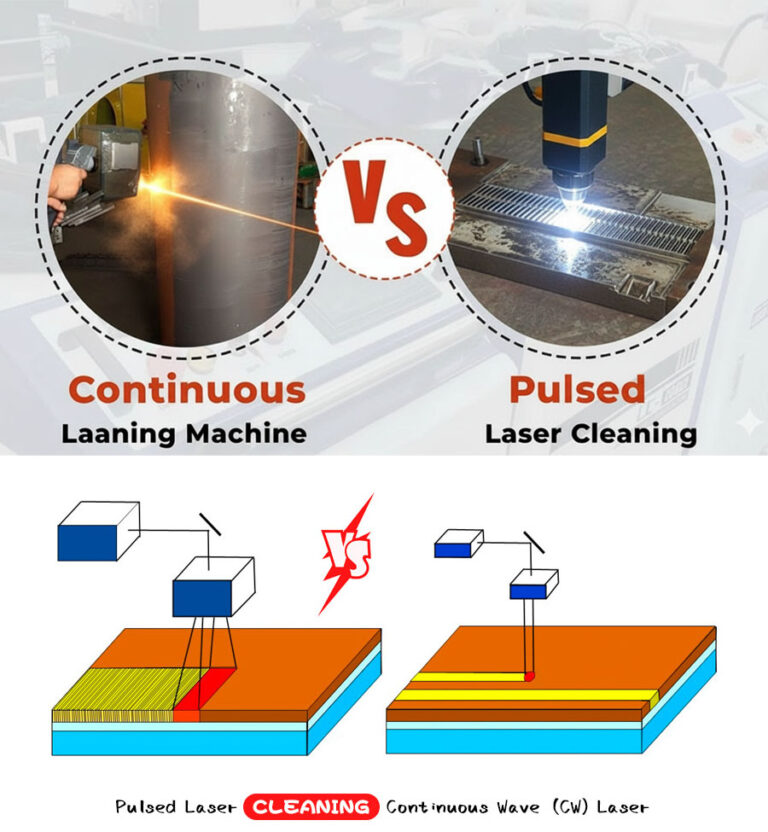
Laser Cleaning: Why It Repeatedly Tops Profitability Analyses
Across industries, laser cleaning consistently ranks among the most profitable cleaning methods once adoption hurdles are overcome.
Cost Structure Comparison
| Cost Element | Laser Cleaning | Abrasive Blasting | Chemical Cleaning |
|---|---|---|---|
| Upfront equipment | High | Medium | Low |
| Consumables | Near zero | High | High |
| Labor | Low | High | High |
| Downtime | Minimal | Significant | Significant |
| Waste disposal | Minimal | High | Very high |
The defining advantage of laser cleaning is cost predictability. Once the equipment is in place, operating costs remain low and stable.
Why Profitability Improves Over Time
Laser cleaning profitability increases with:
- Higher utilization rates
- Operator learning curves
- Integration into production lines
Unlike consumable-heavy methods, margins expand rather than compress as experience grows.
Application-Level Profitability Differences
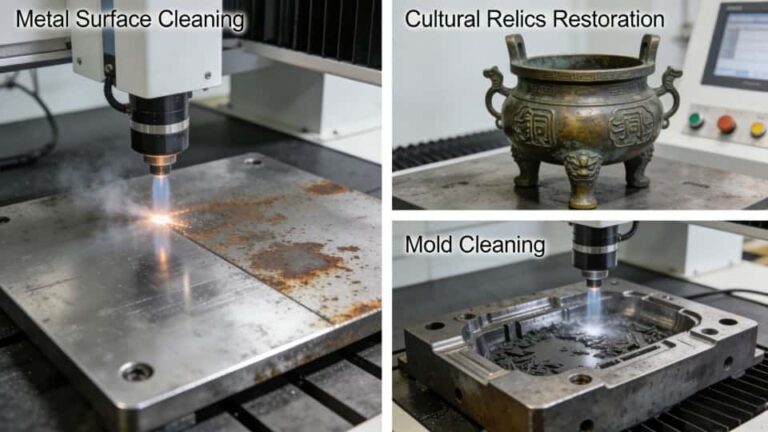
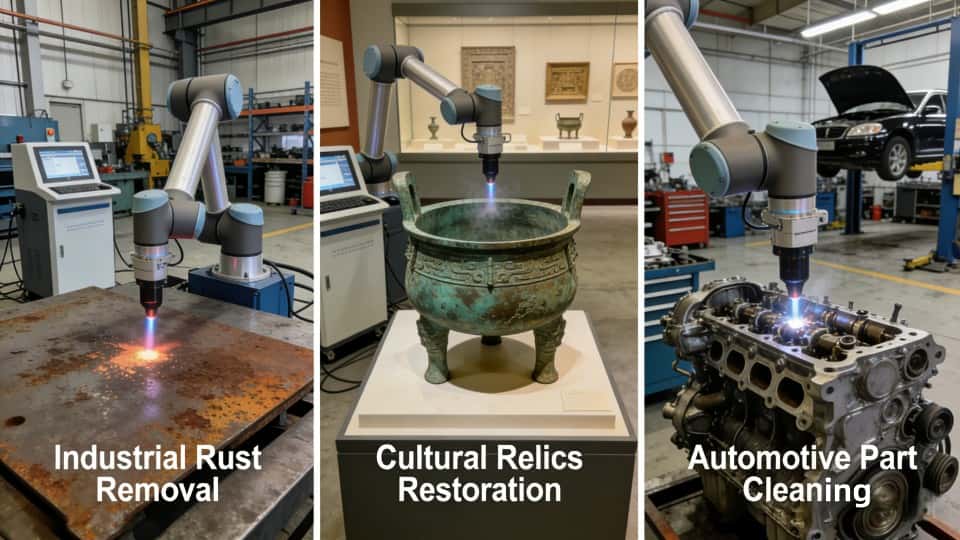
Not all laser cleaning applications are equally profitable. The highest margins appear where laser cleaning replaces multiple legacy steps.
High-Margin Laser Cleaning Applications
| Application | Profit Potential |
|---|---|
| Mold & tool cleaning | Very high |
| Welding pre-treatment | High |
| Paint & coating removal | High |
| Rust removal in maintenance | Medium–high |
| Heritage restoration | Medium |
Mold cleaning often delivers the fastest ROI because downtime costs are enormous and laser cleaning dramatically shortens cleaning cycles.
Service-Based vs In-House Profit Models
Profitability also depends on whether cleaning is offered as a service or used internally.
Cleaning as a Service
| Factor | Profit Effect |
|---|---|
| High hourly rates | Strong margins |
| Low consumables | Cost advantage |
| Mobility | Expanded market |
| Capital recovery | Fast |
Service providers using laser cleaning often recover equipment cost quickly due to premium pricing and low operating expenses.
In-House Cleaning
| Factor | Profit Effect |
|---|---|
| Downtime reduction | Direct savings |
| Labor redeployment | Productivity gain |
| Quality improvement | Less scrap |
| Compliance | Risk reduction |
In-house profitability is measured in avoided costs, which are often underestimated but substantial.
Profit Density: The Metric That Matters Most
The most profitable cleaning methods maximize profit per hour of operation, not just revenue.
Comparative Profit Density (Indicative)
| Cleaning Method | Profit Density |
|---|---|
| Manual cleaning | Low |
| Abrasive blasting | Medium |
| Chemical cleaning | Low–medium |
| Laser cleaning | High |
Laser cleaning achieves high profit density because it combines speed, precision, and low variable cost.
Profitability by Cleaning Application: Where the Real Money Is Made
When profitability is analyzed across real operations, not all cleaning jobs are created equal. The same cleaning technology can be highly profitable in one application and marginal in another. What separates high-profit cleaning from low-profit cleaning is value concentration—how much operational or financial value is unlocked per unit of cleaning time.
High-Profit Cleaning Applications Across Industries
| Application | Why It’s Profitable | Margin Potential |
|---|---|---|
| Mold & tooling cleaning | Downtime avoidance, precision | Very high |
| Welding pre-treatment | Quality improvement, automation | High |
| Coating & paint removal | Rework reduction | High |
| Equipment refurbishment | Asset life extension | Medium–high |
| Structural rust removal | Volume-driven | Medium |
Mold and tooling cleaning consistently ranks at the top because a single hour of downtime in injection molding or die casting can cost more than an entire day of cleaning. Cleaning that prevents downtime carries disproportionate economic value.
Laser Cleaning vs Other “Modern” Cleaning Technologies
Laser cleaning is not the only advanced cleaning method on the market. Dry ice blasting, high-pressure water jetting, and soda blasting are often positioned as alternatives. Profitability differences emerge when lifecycle costs and scalability are examined.
Comparative Profitability Matrix
| Cleaning Technology | Profit Strengths | Profit Limitations |
|---|---|---|
| Laser cleaning | Low variable cost, precision | Higher upfront cost |
| Dry ice blasting | No secondary waste | Consumable dependency |
| High-pressure water | Fast for large areas | Water treatment cost |
| Soda blasting | Gentle on substrates | Media cost, cleanup |
Why Laser Cleaning Wins on Long-Term Margins
Laser cleaning eliminates recurring consumables. Once equipment cost is amortized, each additional cleaning job becomes cheaper, not more expensive. This is the opposite of blasting or chemical processes, where margins erode as consumable costs rise.
Profitability in Service-Based Cleaning Businesses
For entrepreneurs and contractors, the most profitable cleaning type is the one that allows premium pricing with minimal variable cost.
Service Model Economics (Indicative)
| Factor | Laser Cleaning Service |
|---|---|
| Typical hourly rate | High |
| Consumable cost | Near zero |
| Setup time | Low |
| Job consistency | High |
| Capital payback | Fast |
Laser cleaning services often achieve capital payback within 6–18 months, depending on utilization. After that point, profit margins expand significantly.
Why Customers Pay More for Laser Cleaning Services
Clients pay premium rates because laser cleaning:
- Reduces collateral damage
- Minimizes shutdown time
- Avoids environmental risk
- Produces consistent, documented results
Profitability is supported by perceived value, not just cost comparison.
In-House Profitability: Cleaning as a Cost Reduction Tool
For manufacturers, the most profitable cleaning is not sold—it is used internally to reduce hidden costs.
Internal Profit Drivers
| Driver | Financial Effect |
|---|---|
| Reduced downtime | Immediate savings |
| Less rework | Margin protection |
| Labor redeployment | Productivity gain |
| Lower compliance risk | Risk avoidance |
In-house laser cleaning often does not appear as “revenue,” but it improves margins across multiple production lines. This makes it one of the most capital-efficient investments in surface preparation.
Capital Recovery and Cash Flow Perspective
The most profitable cleaning methods are those with short capital recovery periods and predictable cash flow.
Typical Payback Periods
| Cleaning Method | Typical Payback |
|---|---|
| Manual methods | Immediate, low ceiling |
| Abrasive blasting | 1–3 years |
| Chemical cleaning | Unstable |
| Laser cleaning | 6–24 months |
Laser cleaning’s higher upfront cost is offset by rapid recovery once utilization crosses a modest threshold.
Profit Density: The Metric That Separates Winners from Losers
Profit density—profit per operating hour—is a more meaningful metric than revenue per job.
Profit Density Comparison
| Method | Profit Density |
|---|---|
| Manual cleaning | Low |
| Abrasive blasting | Medium |
| Chemical cleaning | Low–medium |
| Laser cleaning | High |
Laser cleaning achieves high profit density because it combines speed, precision, and low variable cost. Each hour worked contributes meaningfully to margin.
When Laser Cleaning Is Not the Most Profitable Choice
An honest analysis must also acknowledge limits. Laser cleaning is not universally optimal.
Low-Profit Scenarios for Laser Cleaning
| Scenario | Why Profit Is Limited |
|---|---|
| Extremely large, low-value surfaces | Speed disadvantage |
| Very thick coatings | High energy demand |
| Low utilization environments | Slow capital recovery |
| Price-only markets | Weak value recognition |
In these cases, hybrid strategies or alternative technologies may offer better economics.
Long-Term Profitability Outlook
The most profitable cleaning methods are those aligned with long-term trends:
- Rising labor costs
- Environmental regulation
- Automation adoption
- Quality consistency requirements
Laser cleaning aligns strongly with all four. This alignment is why its profitability improves over time, rather than eroding.
Final Answer: What Type of Cleaning Is the Most Profitable?
The most profitable type of cleaning is high-value, precision-focused cleaning with low variable costs and strong impact on uptime, quality, or compliance. In most industrial contexts, this places laser cleaning at the top of the profitability hierarchy, particularly for mold cleaning, welding preparation, coating removal, and maintenance refurbishment.
Profit does not come from the cheapest tool—it comes from the tool that creates the most value per hour.
A Practical Perspective from the Field
At BOGONG Machinery, we do not recommend laser cleaning simply because it is advanced. We recommend it where the economics make sense—where it reduces downtime, stabilizes quality, and delivers measurable financial returns.
If you are evaluating cleaning methods with profitability in mind, the right question is not “Which machine is cheaper?” but “Which process improves my margins the most?”
Talk to BOGONG Machinery to evaluate cleaning solutions from a real profitability perspective—grounded in operations, not assumptions.
Talk to Bogong Laser Cleaning Machines ExpertsGet a Quote or Customized Solution for Your Application

-
Whatsapp: +86-15665870861
-
Email: info@bogongcnc.com